
When Your Cortisol Labs Come Back High: What the Evidence Actually Says to Do
If your morning cortisol or late-night salivary cortisol comes back elevated, the evidence-based first step is not a supplement stack — it's a structured diagnostic work-up to determine why it's high. The Endocrine Society explicitly recommends against treating elevated cortisol without a confirmed diagnosis, because the intervention depends entirely on the cause [2].
Diagnosis First: Not All High Cortisol Is the Same
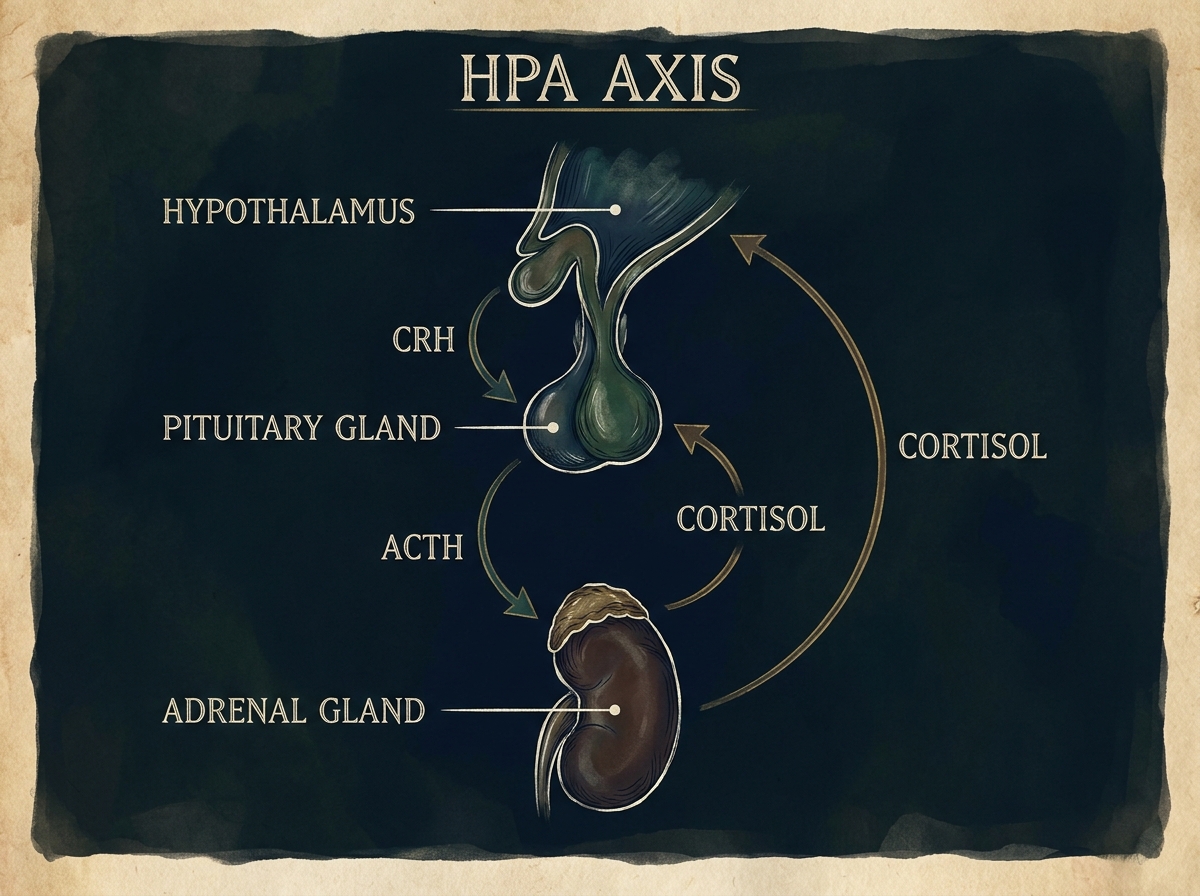
A single elevated cortisol reading means almost nothing in isolation. The HPA axis is circadian and stress-reactive; a random afternoon draw or a single morning value has poor diagnostic utility. Guideline-supported screening uses three modalities: 24-hour urinary free cortisol (UFC), late-night salivary cortisol (collected between 23:00–midnight), or a 1 mg overnight dexamethasone suppression test [12]. Two concordant abnormal results from different modalities are required before etiologic testing begins [2].
Before assuming pathology, rule out what researchers call "pseudo-Cushing states" — chronic sleep deprivation, heavy alcohol use, untreated depression, and obesity can all activate the HPA axis and produce biochemical hypercortisolism without any tumor involved [2][5]. In men specifically, shift work, overtraining, and under-treated depression are common drivers. These resolve when the underlying condition is treated, not when you add phosphatidylserine or ashwagandha.
If you need a starting point for ordering the right panel, compare cortisol testing options through the AHF diagnostics hub to understand which labs include late-night salivary and UFC alongside standard morning serum.
True Pathological Hypercortisolism: What Actually Lowers Cortisol
When two confirmed abnormal tests point to genuine endogenous Cushing's syndrome, treatment targets the source. For pituitary Cushing's disease (the most common cause), transsphenoidal surgical resection of the ACTH-secreting adenoma achieves remission in roughly 80% of microadenoma cases when performed at a high-volume center [5][8]. That is the primary cortisol-lowering intervention — not a lifestyle protocol.
When surgery isn't curative or isn't feasible, medical options include steroidogenesis inhibitors (ketoconazole, osilodrostat, metyrapone) and the glucocorticoid receptor antagonist mifepristone [4][6]. These require endocrinologist oversight, regular cortisol monitoring, and titration to avoid precipitating adrenal insufficiency. Men with ectopic ACTH syndromes — from bronchial carcinoids or small-cell lung tumors — often present with rapidly progressive features and severe hypokalemia; these are oncologic emergencies, not wellness optimization targets [2].
For men on chronic exogenous glucocorticoids (prescribed for inflammatory disease), cortisol suppression is iatrogenic. The only safe path down is a supervised taper — abrupt discontinuation risks adrenal crisis [3]. If your elevated cortisol is coming from a prescribed steroid, that conversation belongs with the prescribing physician, not a health optimization clinic.
Providers like DudeMeds can help coordinate lab interpretation and endocrinology referral if you're navigating an abnormal cortisol panel without a clear next step from your primary care provider.
What Lifestyle Changes Actually Do (and Don't Do)
For pseudo-Cushing states — where the HPA axis is functionally over-activated but no neoplasm is present — the evidence-based interventions are: alcohol cessation, structured sleep (cortisol dysregulation from chronic sleep restriction is well-documented), treatment of major depression, and reduction of chronic stressors. These can meaningfully normalize cortisol in the right context. They will not touch an ACTH-secreting pituitary adenoma.
The supplement market vastly overstates what adaptogens do to pathologically elevated cortisol. The honest read: ashwagandha has modest HPA-modulating data in healthy stressed adults; it has no evidence in confirmed Cushing's syndrome. Phosphatidylserine has weak, dated data. Neither belongs in the same conversation as osilodrostat or surgical resection. For a broader look at how lab-based diagnostics intersect with hormonal health, the piece on adrenal fatigue vs. jing depletion and what diagnostics miss covers the gap between functional-medicine narratives and endocrine guideline standards.
The bottom line: cortisol normalization after confirmed Cushing's syndrome produces real, measurable improvements — blood pressure, glycemia, testosterone recovery, cardiovascular risk — but those benefits flow from treating the diagnosis, not from managing a number [2][5].
Related reading
- Sleep Hacks That Actually Work for Men in 2026
- Why Men Gain Weight After 40 — and the Biohacks That Actually Work in 2026
- Viagra vs. Levitra Onset Time: What the Pharmacokinetics Actually Show
Frequently asked questions
What labs should I order first if I suspect high cortisol?
Start with late-night salivary cortisol (collected at 11 p.m.–midnight) and a 1 mg overnight dexamethasone suppression test — these are the two highest-yield first-line screening tools per Endocrine Society guidelines [2]. A single abnormal result is not diagnostic; you need two concordant abnormal tests from different modalities before etiologic work-up begins. Order both alongside a morning serum cortisol for context, and bring results to an endocrinologist rather than acting on them independently.
Can lifestyle changes lower pathologically elevated cortisol?
Lifestyle changes can normalize cortisol in pseudo-Cushing states — cases where chronic stress, alcohol use, sleep deprivation, or depression drives HPA over-activation — but they have no meaningful effect on cortisol produced by an ACTH-secreting tumor or autonomous adrenal adenoma [2][5]. If your elevated cortisol is confirmed as endogenous Cushing's syndrome by two screening tests
What happens if you stop taking prescribed steroids abruptly when cortisol is high?
Abruptly discontinuing prescribed glucocorticoids risks adrenal crisis, which is a medical emergency. The article states that for men on chronic exogenous glucocorticoids, the only safe path to lowering cortisol is a supervised taper coordinated with the prescribing physician. This is because long-term steroid use suppresses the HPA axis, leaving the adrenal glands unable to produce adequate cortisol independently if the medication is stopped suddenly.
For a deeper primer on TRT and hormone optimization protocols, see our hormone optimization guide.
Nutrition & Metabolic Health Specialist · 8+ years specializing in men's nutrition, Extensive training in clinical nutrition and metabolism
Taylor is a nutrition specialist focusing on men's metabolic health and weight management. With deep expertise in therapeutic nutrition for hormone disorders, Taylor researches and explains how nutrition impacts testosterone, metabolism, and overall male wellness.
Looking for an online provider?
Find a qualified online provider — compare options vetted and reviewed by Alpha Health Finder.