That is why we land where we do: tadalafil first for nearly every man, shockwave for a narrow group who know what they are buying. One caveat shapes everything below. No randomised trial has ever put low-intensity shockwave therapy (Li-ESWT) head to head against tadalafil alone, so every comparison — including this one — is built from two separate bodies of evidence, in different men, over different time frames.
Starting from
On request

3.0 AHF · 3.9 Trustpilot
Combination formulas a standard generic pharmacy will not compound, reviewed by a licensed physician. Neither price nor state coverage is published before you complete the intake quiz, which is the main reason to be cautious.
Get Started FreeTwo different promises: on-demand chemistry vs a bid at repair
Tadalafil is a PDE5 inhibitor. It does not create an erection; it amplifies the one sexual stimulation starts. The FDA label approves it two ways for ED: as needed, starting at 10 mg before sex (adjustable to 5 or 20 mg), or once daily, starting at 2.5 mg and increasable to 5 mg [4]. As-needed doses improved erections compared to placebo for up to 36 hours [4]. Its limitation is structural: it only works while it is in your system.
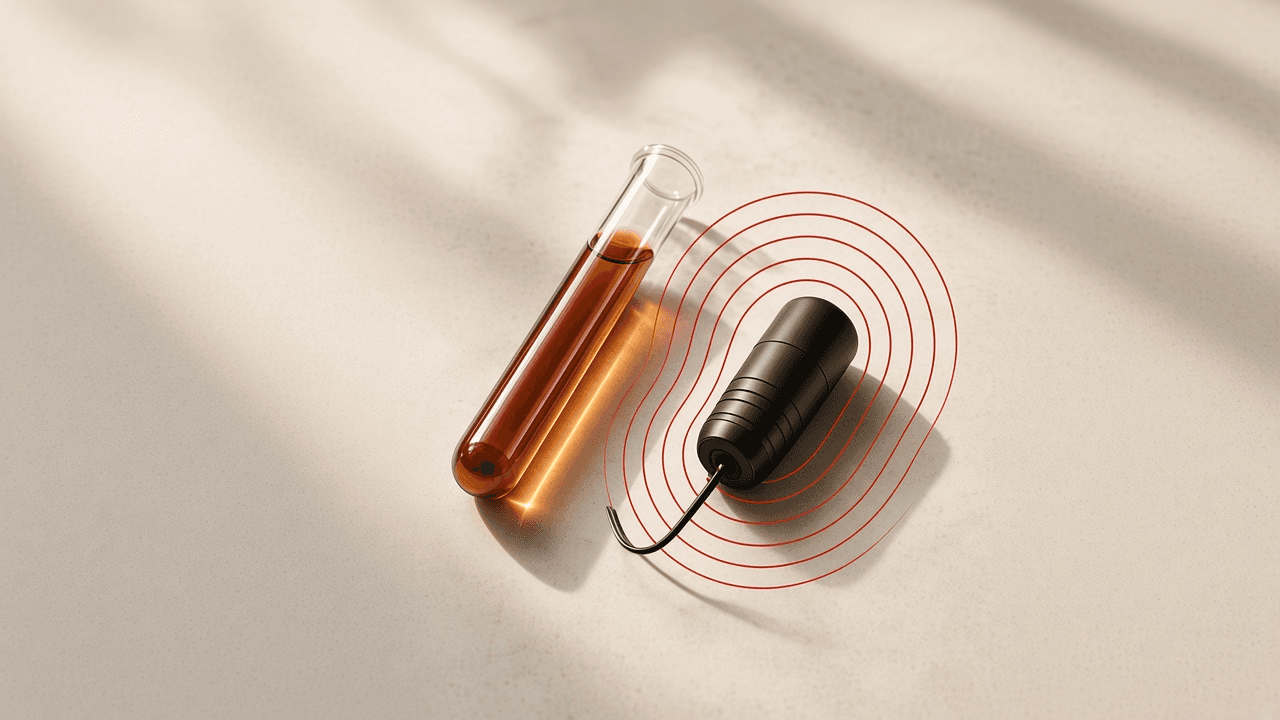
Li-ESWT makes the opposite promise. A probe delivers low-energy acoustic pulses to the penis over six to twelve short sessions. The theory, drawn mostly from animal work, is that the micro-stress triggers new blood-vessel growth — repairing some of the vascular damage behind most ED in men over 40. The European Association of Urology's 2026 guideline puts it bluntly: shockwave is "the only currently marketed treatment that might offer a cure" [1]. The word doing the work in that sentence is "might".
So the choice is really between a reliable tool and a possible repair — and the evidence for the second is much weaker than the marketing.
What the tadalafil trials show
The tadalafil evidence base is large and boring in the way you want: 22 trials of up to 24 weeks in more than 4,000 men [4]. The two pivotal US trials enrolled 402 men, mean age 59, with ED of mixed severity and cause [4]. On the erectile function domain of the International Index of Erectile Function (IIEF-EF, scored out of 30), tadalafil 20 mg improved scores by 6.9 and 9.3 points from baseline; the placebo groups moved by −0.2 and +0.3 [4]. Successful intercourse rose by 34 and 44 percentage points, compared to 5 and 4 on placebo, and the effect did not diminish over time [4]. Two more numbers matter here:
- Men with diabetes. In a dedicated trial of 216 men with type 1 or type 2 diabetes, tadalafil 10 mg and 20 mg raised IIEF-EF by 6.4 and 7.3 points, against 0.1 on placebo [4]. Diabetic ED is hard to treat; tadalafil still worked.
- Once-daily dosing. Three trials in 853 men showed daily tadalafil works regardless of timing [4]. This is the version combined with shockwave in the trials below.
Common side effects are headache, indigestion, back pain, muscle aches, nasal congestion, flushing and limb pain [4]. The hard stop is nitrates: tadalafil is contraindicated with any organic nitrate and with guanylate cyclase stimulators such as riociguat [4]. That is one of the few situations where shockwave clearly wins — not because it works better, but because tadalafil is off the table.
What the shockwave trials show — and why sham control is everything
A dozen clinic visits with a humming device and a promise of repair is a powerful placebo in itself. That is why we put almost no weight on open-label shockwave studies or clinic testimonials. The only evidence worth reading compares active treatment with a sham probe that looks and sounds the same.
The early sham-controlled trials looked strong. The first, from Israel in 2012, randomised 67 PDE5-inhibitor responders to 12 sessions of shockwave or sham [5]. IIEF-EF rose by 6.7 points with active treatment compared to 3.0 with sham, and penile blood flow improved only in the treated group [5]. A follow-up trial from the same group in 58 men who had given up on PDE5 inhibitors because they did not work found that 54.1% of shockwave-treated men could achieve an erection firm enough for penetration (while still taking their PDE5 inhibitor), compared with none on sham [6]. Striking results — from one research network, one of whose investigators has disclosed consultancy for a shockwave device maker [6].
Not every sham-controlled trial was positive. A Danish trial of 126 men using a linear shockwave device found success rates of 37.9% with active treatment and 38.3% with sham — no difference at all [7]. Another Danish trial of 112 men improved hardness scores but not IIEF-EF, and by 24 weeks only about one in five men in either arm could have intercourse without medication [8]. The EAU also notes a sham-controlled radial-wave trial that showed nothing [1]. Not all "shockwave" is the same treatment.
The meta-analyses agree that there is an effect, and disagree about whether it matters. A 2017 meta-analysis of seven sham-controlled trials (602 men, average age 60.7) found IIEF-EF improved by 6.40 points with active treatment compared to 1.65 with sham [9]. That is the number clinics quote. Two 2026 reviews are more cautious. One pooled 19 RCTs, found statistically significant improvements at one, three and six months, and concluded that most studies failed to reach the minimal clinically important difference, so "it remains unclear whether LI-ESWT provides a clinically meaningful benefit for ED at the present time" [10]. The International Society for Sexual Medicine's commissioned review called the evidence "mixed", noted 78% of studies did not report clinically important differences, and said routine use cannot yet be recommended [11]. A third 2026 analysis of recent sham-controlled trials found a moderate-to-large short-term effect — on four trials and 226 men [12].
Our reading: focused Li-ESWT with a sham-tested protocol probably does something real for vascular ED. That something is smaller and less certain than the early trials suggested.
Shockwave vs tadalafil, side by side
With no head-to-head trial, the honest comparison is what each treatment did against its own control. Read it as context, not a contest.
| Tadalafil | Focused Li-ESWT | |
|---|---|---|
| Effect over control on IIEF-EF | ~7 to 9 points over placebo (US pivotal trials) [4] | ~4.75 points over sham by our arithmetic (2017 pooled estimate) [9]; newer reviews question clinical relevance [10][11] |
| Men with diabetes | +6.4 to +7.3 vs +0.1 on placebo [4] | Sham-controlled diabetic data limited; effect lost by 2 years in diabetic men with severe ED [16] |
| When it works | Within hours, for up to 36 hours per dose [4] | Benefit appears one to three months after the course ends [1] |
| Durability | Works while taken; effect did not diminish in trials [4] | Kept by about half of initial responders at 2 years [16] |
| Regulatory status (US) | FDA-approved for ED [4] | Not FDA-approved for ED [3]; AUA calls it investigational [3] |
| Typical cost | ~$696 a year for as-needed PDE5i, modelled [20] | ~$3,338 to $3,445 per course [19][20] |
| Who should avoid it | Men on nitrates or riociguat [4] | Men with severe ED plus diabetes; post-prostatectomy ED outside trials |
On every row except "no pill" and "safe with nitrates", tadalafil has the edge over shockwave. The case for shockwave rests on durable repair — the row where its own evidence is weakest.
Combining them: what adding shockwave to tadalafil adds
The more useful question is whether shockwave adds anything on top of tadalafil. Both randomised trials come from one group in Thessaloniki, Greece.
Mild to mild-to-moderate ED. Fifty men with vascular ED received six shockwave sessions over three weeks plus either daily tadalafil 5 mg or placebo for four weeks [13]. Adding tadalafil improved IIEF-EF by 0.8 points more at one month (not significant), 1.0 more at three months and 1.7 more at six months, with no adverse events [13]. Note the direction: this measured adding tadalafil to shockwave, in a single centre [13].
Severe ED. In a 2024 double-blind trial, men with severe vascular ED all took daily tadalafil 5 mg and were randomised roughly two to one to 12 sessions of real or sham shockwave over four weeks [14]. Three months after treatment, IIEF-EF averaged 12.9 in the combination group versus 10.8 with tadalafil plus sham — about a two-point difference — and the share of men reaching a clinically meaningful improvement differed only at the three-month visit [14]. The diary measure of successful intercourse did not differ significantly between groups [14]. On a 30-point scale, both groups still had substantial ED.
A 2021 JAMA Network Open meta-analysis put the gain from adding shockwave to a PDE5 inhibitor at 3.5 IIEF points — from a single study [15]. The EAU now says combination therapy "should be considered as a first-line approach" for refractory, complex or difficult-to-treat ED, naming PDE5 inhibitors plus shockwave as one option [1].
Our view: combination is the most defensible use of shockwave, because nobody gives up the treatment that works. But the gain is about two points — not worth the money for a man doing well on tadalafil, reasonable for one whose response is partial and who wants to try something before injections.
Durability, diabetes and severity: who actually benefits
Durability. The best long-term data follow 156 Israeli men treated under one protocol [16]. At one month, 99 (63.5%) had a clinically meaningful improvement. Over two years the effect gradually faded, and only 53 of those 99 kept it — about half [16]. Men without diabetes who started with milder ED had a 76% chance of keeping the benefit at two years [16]. The EAU guideline describes the same arc: the effect shows up one to three months after treatment, then progressively decreases, though some effect may still be detectable up to five years [1].
Diabetes. Here the two diverge most. Tadalafil has a 216-man diabetic trial on its label [4]. For shockwave, the Israeli follow-up found that every diabetic man with severe ED lost the effect within two years [16]. A pooled analysis reporting benefit in 61 diabetic men was co-authored by a device-maker employee [17]. A 2026 Egyptian trial in 90 men with type 2 diabetes found shockwave plus sildenafil beat sildenafil alone, but had no sham arm, and beat pelvic-floor exercise by just 1.4 points on a 25-point scale [18]. For a diabetic man, tadalafil is clearly the better choice to start.
Severity. Shockwave's signal is strongest in mild vascular ED [1][16]; severe ED is where it fades fastest [16]. The men most drawn to a "cure" are the ones the data serve least.
What is genuinely not known. No trial compares shockwave alone with tadalafil alone. No sham-controlled trial runs much beyond a year. There is no agreed protocol — energy, pulses, sessions and device all vary, and the 2026 reviews could not name a best regimen [10][11]. Men with post-prostatectomy ED were largely excluded. So any success rate a clinic quotes comes from a different protocol, device and man.
Cost, regulation and what the guidelines actually say
Cost. A UCLA "secret shopper" study of 152 clinics offering shockwave for ED across eight large US metro areas found an average price of $3,338 per course; only 25% of the providers were urologists and 13% were not physicians [19]. A 2025 Medicare cost model put one course at $3,445 out of pocket, against about $696 a year for an as-needed PDE5 inhibitor prescription — and Medicare has no coverage policy for shockwave [20]. The cost model was partly authored by a penile-implant manufacturer's staff [20], but the order of magnitude is not in dispute. By our arithmetic, one course of shockwave costs roughly what five years of an as-needed PDE5 inhibitor does on those figures, and half the responders will be shopping for a second course within two years [16].
Regulation. No shockwave device is FDA-approved for ED [3]; our November 2026 search of FDA's device classification records found no product code for it.
The guidelines do not agree, which is itself informative.
- AUA (US, 2018): For men with ED, low-intensity shockwave "should be considered investigational," a position the guideline issues as a conditional recommendation [2][3][20]. The same guideline asks clinicians to inform every patient of all treatment options that are not contraindicated, as a matter of shared decision-making [2]. The 2018 document is still the AUA's current ED guideline.
- EAU (Europe, 2026): PDE5 inhibitors are first-line, with a strong recommendation [1]. Shockwave, with or without a PDE5 inhibitor, gets a weak recommendation in three groups: men with mild vascular ED, well-informed men who do not want or cannot take oral drugs, and men with vascular ED who respond poorly to PDE5 inhibitors [1]. Its summary of evidence says shockwave "can induce a mild improvement" in erectile function [1].
- ISSM / International Consultation on Sexual Medicine (2026): The evidence for penile shockwave is the strongest of all the regenerative treatments, but "not sufficiently robust to reach consensus agreement regarding their clinical recommendation" [21].
No major society recommends shockwave over a PDE5 inhibitor as a first step.
Who should try which first
Start with tadalafil if you have ED of any severity, any cause other than a contraindication, and you have not yet had a fair trial of a PDE5 inhibitor. That is most men reading this. Daily dosing suits men who want spontaneity; as-needed suits men who have sex less often [4]. With diabetes, this is even more clearly the right first step [4][16]. Online, Hims, Roman and Strut Health all prescribe generic tadalafil after a consult; Maximus and PeterMD suit men who want ED treated alongside a broader hormone and metabolic workup, which matters because ED is often the first sign of vascular disease.
Consider shockwave on its own only if all of these are true: your ED is mild and plausibly vascular; you do not have diabetes; you cannot take a PDE5 inhibitor (nitrates, riociguat) or genuinely do not want to; and you understand you are paying around $3,400 for a modest effect that half of responders lose within two years [16][19]. That is the EAU's narrow use case, and we agree [1]. Use a urologist, a focused device and a sham-tested protocol — not linear or radial "acoustic wave" devices [1][7].
Consider adding shockwave to tadalafil if your response to tadalafil is real but partial, you are not ready for injections, and you have the money to spend on a two-point gain [14]. Keep taking tadalafil throughout; the trials that showed benefit did [13][14]. For men who stop responding to tablets altogether, our guide to what to try when Viagra fails covers injections and the options beyond.
Skip shockwave if you have diabetes plus severe ED [16], your ED followed prostate surgery (that population was largely excluded from the trials), or the clinic quoting you cannot name the device, the energy setting and the trial its protocol came from.
For comparing prescribers on price, Sesame Care offers pay-per-visit consults, and MangoRx, DudeMeds and BraveRX are further options for ED prescriptions. You can compare online ED providers side by side, and our sexual health hub covers the in-clinic treatment ladder. If you are deciding between daily and as-needed dosing, read tadalafil 5 mg daily vs as-needed; for the wider shockwave debate, see our earlier shockwave vs Viagra piece.
A large multicentre trial with a standard protocol, a sham arm and two-year follow-up would settle most of this. Until it exists, tadalafil is the better choice for almost everyone, and shockwave a reasonable bet only for the few men the evidence was built on.
Frequently asked questions
Is shockwave therapy better than tadalafil for ED?
No trial has compared them directly. Tadalafil improved scores by roughly 7 to 9 points over placebo [4]; shockwave's effect over sham is smaller and of debated clinical value [9][10][11]. Shockwave's only advantage is possible lasting improvement without a pill, which the evidence has not confirmed.
How long do the results of shockwave therapy last?
In the largest follow-up, about half of men who responded at one month still had a meaningful benefit at two years [16]. Men with milder ED and no diabetes did best, keeping the benefit about three-quarters of the time; diabetic men with severe ED lost it in every case [16]. The EAU notes that some effect may be detectable up to five years [1].
Can I take tadalafil during shockwave treatment?
In both combination trials, men took daily tadalafil 5 mg through the course, and the combination modestly outperformed either alone [13][14]. Check with your prescriber, especially if you take heart medication — tadalafil must never be combined with nitrates [4].
Is shockwave therapy for ED FDA-approved?
No. No shockwave device is FDA-approved for erectile dysfunction [3], and the AUA classifies the treatment as investigational [2][3]. European guidelines give it a weak recommendation for selected men with mild vascular ED or poor response to PDE5 inhibitors [1].
Does shockwave therapy work for men with diabetes?
The evidence is thin and mixed [17][18], and diabetic men with severe ED lost the benefit within two years [16]. Tadalafil has a dedicated diabetic trial on its label showing a 6 to 7 point improvement [4].
How much does shockwave therapy cost compared to tadalafil?
A survey of 152 US clinics found an average of $3,338 per course [19]; a Medicare cost model estimated $3,445 per course against about $696 a year for an as-needed PDE5 inhibitor [20]. Medicare has no coverage policy for it, so expect to pay out of pocket [20].
Sources
- [1] European Association of Urology, EAU Guidelines on Sexual and Reproductive Health, Management of erectile dysfunction, 2026
- [2] Burnett et al., Erectile Dysfunction: AUA Guideline, Journal of Urology, 2018
- [3] Drury, Natale and Hellstrom, Reviewing the evidence for shockwave- and cell-based regenerative therapies in the treatment of erectile dysfunction, Therapeutic Advances in Urology, 2021
- [4] Cialis (tadalafil) prescribing information, Eli Lilly, DailyMed, June 2026
- [5] Vardi et al., Does low intensity extracorporeal shock wave therapy have a physiological effect on erectile function? A randomized, double-blind, sham controlled study, Journal of Urology, 2012
- [6] Kitrey et al., Penile low intensity shock wave treatment is able to shift PDE5i nonresponders to responders: a double-blind, sham controlled study, Journal of Urology, 2016
- [7] Fojecki, Tiessen and Osther, Effect of low-energy linear shockwave therapy on erectile dysfunction: a double-blinded, sham-controlled, randomized clinical trial, Journal of Sexual Medicine, 2017
- [8] Olsen et al., Can low-intensity extracorporeal shockwave therapy improve erectile dysfunction? A prospective, randomized, double-blind, placebo-controlled study, Scandinavian Journal of Urology, 2015
- [9] Clavijo et al., Effects of low-intensity extracorporeal shockwave therapy on erectile dysfunction: a systematic review and meta-analysis, Journal of Sexual Medicine, 2017
- [10] You et al., A close look at the evidence on low-intensity shockwave therapy in erectile dysfunction: a systematic review and meta-analysis of randomized controlled trials, Journal of Sexual Medicine, 2026
- [11] Kohn et al., Systematic review on the safety and effectiveness of restorative therapies for erectile dysfunction, Journal of Sexual Medicine, 2026
- [12] Sánchez-Sierra et al., Efficacy of low-intensity extracorporeal shockwave therapy for erectile dysfunction: an updated systematic review and meta-analysis of randomized sham-controlled trials, European Journal of Obstetrics & Gynecology and Reproductive Biology, 2026
- [13] Mykoniatis et al., The effect of combination treatment with low-intensity shockwave therapy and tadalafil on mild and mild-to-moderate erectile dysfunction: a double-blind, randomized, placebo-controlled clinical trial, Journal of Sexual Medicine, 2022
- [14] Kalyvianakis et al., The effect of combination treatment with low-intensity shockwave therapy and daily tadalafil on severe erectile dysfunction: a double-blind, randomized, sham-controlled clinical trial, Journal of Sexual Medicine, 2024
- [15] Mykoniatis et al., Assessment of combination therapies vs monotherapy for erectile dysfunction: a systematic review and meta-analysis, JAMA Network Open, 2021
- [16] Kitrey et al., Low intensity shock wave treatment for erectile dysfunction: how long does the effect last?, Journal of Urology, 2018
- [17] Spivak et al., Low-intensity extracorporeal shockwave therapy for erectile dysfunction in diabetic patients, Sexual Medicine Reviews, 2021
- [18] Ahmad et al., Low-intensity shockwave therapy and pelvic floor muscle training each mitigate erectile dysfunction in men with diabetes: a randomised controlled trial, Journal of Physiotherapy, 2026
- [19] Weinberger et al., Shock wave therapy for erectile dysfunction: marketing and practice trends in major metropolitan areas in the United States, Urology Practice, 2022
- [20] Nguyen et al., Patient out-of-pocket costs for guideline-recommended treatments for erectile dysfunction: a Medicare cost modeling analysis, International Journal of Impotence Research, 2025
- [21] Chubak et al., New regenerative interventions and treatment targets in sexual medicine: recommendations from the Fifth International Consultation on Sexual Medicine (ICSM 2024), Sexual Medicine Reviews, 2026
Alpha Health Finder Editorial Team
Editorial Team
The Alpha Health Finder editorial team researches and writes evidence-based men's health content. Articles are grounded in cited primary sources and reviewed against a fixed editorial standard before publication. We are a research and directory team — not your prescribing clinicians.
Looking for an online provider?
Find a qualified online provider — compare options vetted and reviewed by Alpha Health Finder.
One email a week. The research, not the hype.
What we published this week, what we changed our minds about, and what it means if you are on a protocol.
No spam, no selling your address. Unsubscribe in one click.