Oral Wegovy vs. Injectable Wegovy: Which Form Delivers Better Results in 2026?
Both versions of Wegovy — the once-weekly subcutaneous injection and the once-daily oral tablet — produce clinically meaningful weight loss using the same active drug, semaglutide. The injectable form edges out the pill by roughly 1–2 percentage points of body weight on average, but that gap is small enough that the real decision comes down to lifestyle fit, not raw efficacy.
Starting from
$199
Free consultation

4.0 AHF · 4 Trustpilot
The 10% weight-loss guarantee is a real commitment few competitors make, and there is no subscription fee on top of the medication. GLP-1 only, so it is a single-problem provider.
Get Started FreeEfficacy: Close, but the Injection Still Leads
The pivotal STEP-1 trial, published in NEJM, showed injectable semaglutide 2.4 mg (Wegovy) produced mean weight loss of 14.9% over 68 weeks — with 50% of participants losing ≥15% of body weight [8]. The OASIS-1 trial tested oral semaglutide titrated to 50 mg daily and landed at 15.1% mean weight loss over the same period, essentially matching the injection in a head-to-head trial comparison [2][8].
The FDA-approved oral dose is 25 mg daily, not 50 mg. At that approved dose, OASIS-4 data showed roughly 13.6% mean weight loss under a treatment-policy estimand — still clinically significant, but modestly below the injectable benchmark [4]. A real-world comparative study of 240 adults found injectable Wegovy outperformed oral semaglutide by 1.4 percentage points (−14.7% vs. −13.3%), a statistically significant but practically modest difference [7]. Adherence was also better with weekly injections, likely because strict morning fasting rules for the pill are harder to sustain than a once-weekly shot.
For context on how semaglutide compares to newer dual-agonist options like tirzepatide, see our analysis of tirzepatide vs. semaglutide for men's fat loss in 2026.
Administration: Where the Two Forms Really Diverge
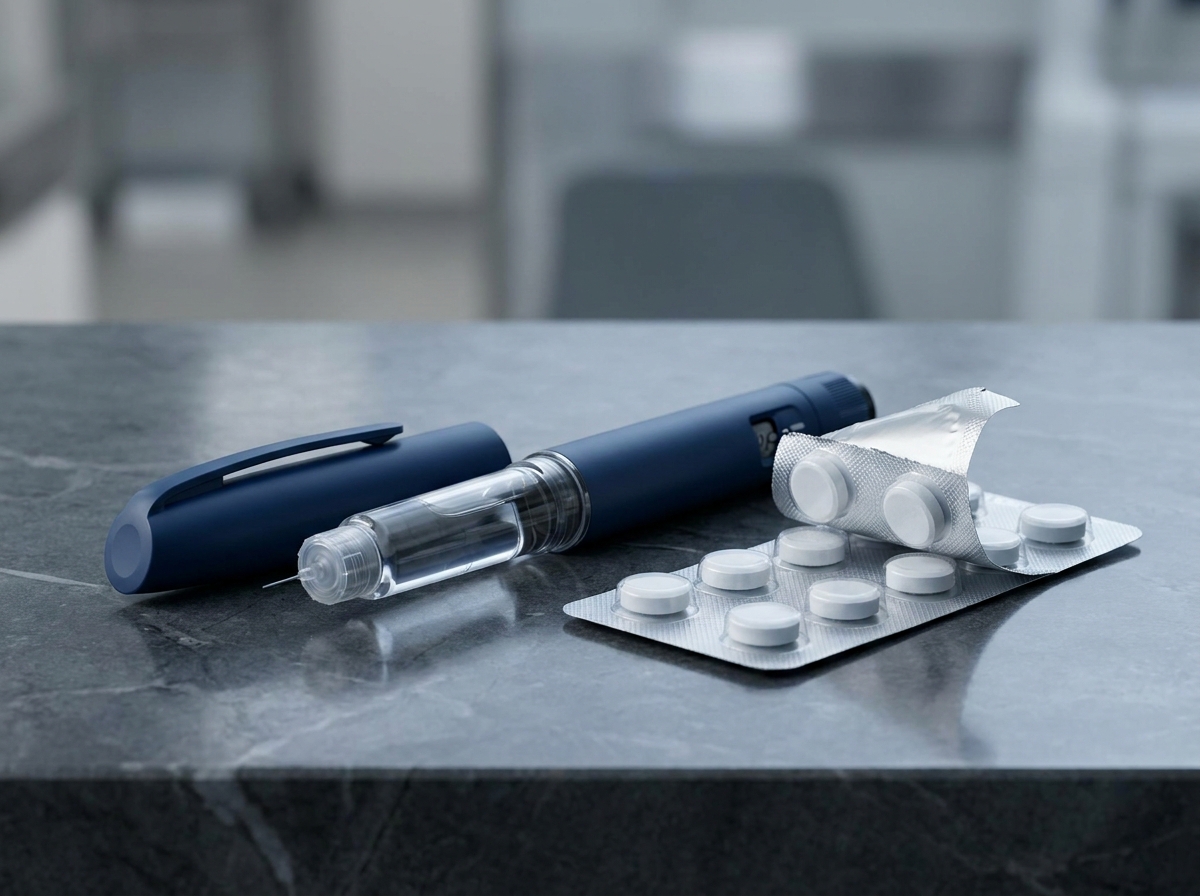
Injectable Wegovy starts at 0.25 mg weekly and escalates to 2.4 mg over 16 weeks. Timing is flexible — any day, any time, with or without food [4]. The pen is prefilled and designed for subcutaneous injection in the abdomen, thigh, or upper arm.
Oral Wegovy demands more discipline. The tablet must be taken first thing in the morning on an empty stomach, with no more than 4 oz of plain water, and no food or other oral medications for at least 30 minutes after [5]. Miss that window — eat first, drink a full glass of water, or co-administer another drug — and bioavailability drops. The pill's oral bioavailability is roughly 1%, versus ~89% for the injection, which is why the approved dose is numerically 25 mg versus 2.4 mg [1][5].
If you're weighing providers for either format, compare weight-loss telehealth options on our provider hub before committing to a prescription platform.
Safety and Practical Tradeoffs
Both formulations carry the same FDA boxed warning regarding theoretical thyroid C-cell tumor risk based on rodent data — a shared label requirement across all GLP-1 receptor agonists. Patients with a personal or family history of medullary thyroid carcinoma or MEN2 are contraindicated on either form [4].
Gastrointestinal side effects dominate both profiles. In OASIS-1, 80% of oral semaglutide participants reported GI events versus 46% on placebo [2][3]. Injectable Wegovy shows similar but slightly lower GI event rates in STEP-1, possibly because weekly dosing creates smoother exposure versus daily oral peaks. Both forms taper GI symptoms as dose escalation completes. For a broader look at how branded semaglutide compares to compounded versions, the piece on compounded semaglutide vs. brand-name Wegovy covers the tradeoffs in detail.
Cost and insurance coverage remain real barriers for both. If you want a guided path to a prescription, Shed's GLP-1 program supports both injectable and oral semaglutide protocols through licensed providers. A full breakdown of current treatment options lives at our weight management treatment guide.
Frequently asked questions
Which form of Wegovy causes more weight loss — oral or injectable?
Injectable Wegovy produces modestly greater average weight loss than oral Wegovy at the approved doses — approximately 14.9% with the injection versus 13.6% with the 25 mg pill over 68 weeks. The gap narrows considerably among patients who adhere strictly to the oral tablet's fasting requirements, with OASIS-1 showing 15.1% loss at the investigational 50 mg dose. For most people, the difference is clinically small; the injection's edge comes largely from better real-world adherence, not pharmacology.
Can I switch from injectable Wegovy to the oral pill?
Switching formulations is medically feasible and some clinicians are doing it in 2026 for patients who develop injection fatigue or site reactions. The transition requires restarting the oral dose-escalation schedule rather than converting doses directly. Discuss timing with your prescriber — jumping straight to a high oral dose after tolerating injections can still trigger GI side effects, since the absorption mechanism and exposure curve differ.
Who is the oral Wegovy pill best suited for?
Oral Wegovy is the stronger fit for patients with needle phobia, bleeding disorders, or logistical barriers to refrigerating injection pens. It works best for people with a consistent morning routine who can reliably take the pill fasted, wait 30 minutes, and avoid co-administering other oral medications at the same time. Patients with irregular schedules, multiple morning medications, or a history of poor adherence to daily oral regimens will likely do better with the
Alpha Health Finder Editorial Team
Editorial Team
The Alpha Health Finder editorial team researches and writes evidence-based men's health content. Articles are grounded in cited primary sources and reviewed against a fixed editorial standard before publication. We are a research and directory team — not your prescribing clinicians.
Looking for an online provider?
Find a qualified online provider — compare options vetted and reviewed by Alpha Health Finder.