
Does Caffeinated Chewing Gum Actually Improve Athletic Performance?
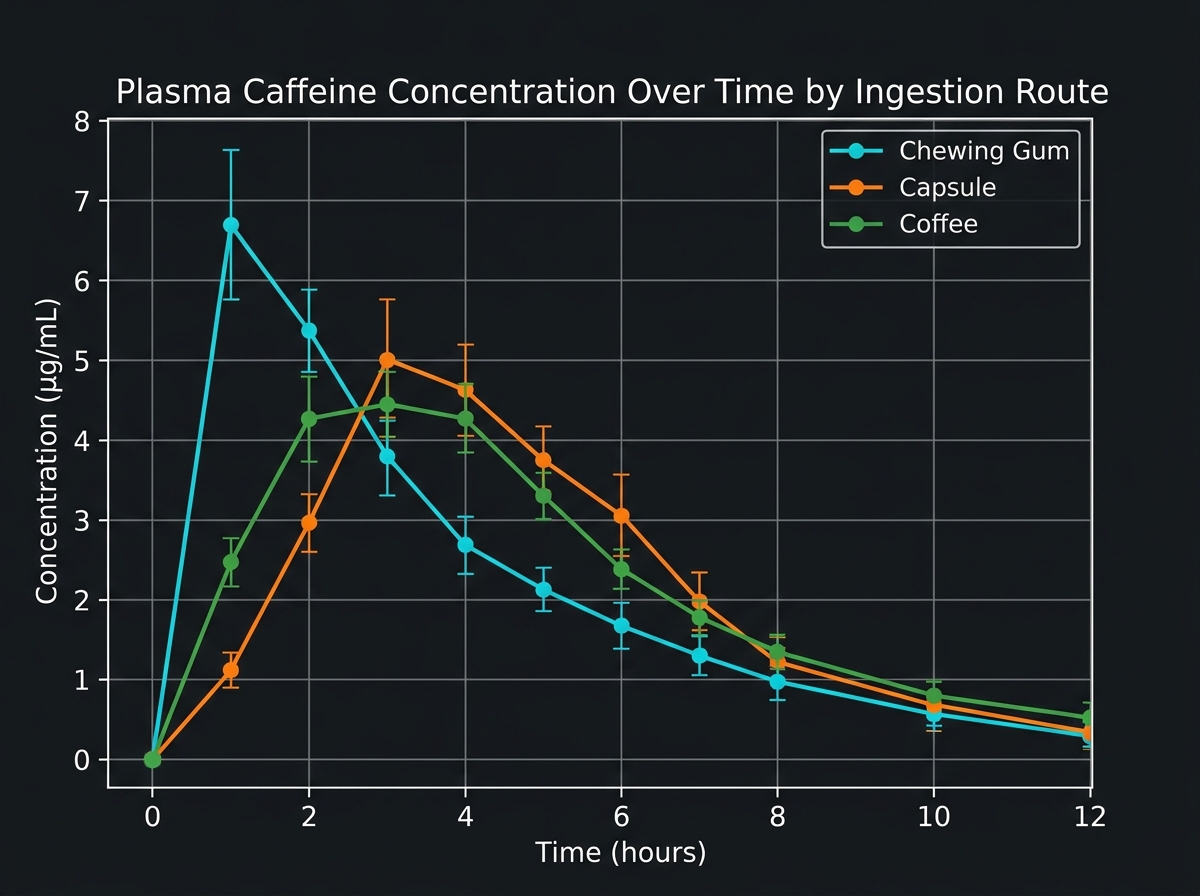
Caffeinated chewing gum delivers a measurable ergogenic effect — and controlled research confirms it works faster than coffee or capsules. The absorption mechanism is the key differentiator: buccal uptake through the cheek and gum tissue bypasses first-pass metabolism, getting caffeine into circulation in roughly 5–10 minutes versus 45–60 minutes for swallowed forms.
What the Controlled Research Shows
The core finding across multiple crossover trials is consistent: caffeinated gum (typically 100–300 mg doses) improves time-trial performance, peak power output, and endurance capacity in trained athletes. A well-replicated effect size lands around a 2–4% improvement in cycling time trials — modest in absolute terms, meaningful at competitive margins.
The speed-of-absorption advantage matters most in two scenarios: pre-competition warm-up windows where swallowing a pill 60 minutes out isn't practical, and mid-race or halftime top-ups where gastric absorption would arrive too late to matter. Rugby and soccer studies have used 100 mg doses at halftime with measurable second-half sprint improvements compared to placebo.
Dose-response appears to follow the same curve as other caffeine formats — roughly 3–6 mg/kg body weight hits the performance sweet spot, with diminishing returns and increased jitteriness above that range. A 180 lb (82 kg) man lands in the 246–492 mg window, which maps to 2–4 standard 100 mg gum pieces.
Practical Tradeoffs vs. Other Caffeine Formats
Caffeinated gum isn't strictly superior to other delivery formats — it's situationally better. For athletes who already have a 60-minute pre-workout window, standard capsules or coffee produce equivalent plasma peaks at lower cost. Gum's advantage is the compressed timeline and the ability to dose precisely in environments where drinking isn't convenient (cycling, combat sports, team sport warm-ups).
One real-world consideration: jaw fatigue and taste tolerance. Most performance gums require 5–10 minutes of active chewing for full buccal absorption, and the caffeine-forward bitterness isn't universally tolerated. Several users on r/running noted they abandoned the format mid-race because the taste became aversive at high exertion levels.
Tolerance and sleep disruption follow the same rules as any caffeine source. If you're tracking broader performance markers — testosterone, recovery quality, HRV — habitual high-dose caffeine use is worth monitoring in the context of a full hormone optimization protocol. Caffeine chronically elevates cortisol at doses above ~400 mg/day, which can suppress anabolic signaling over time.
For men over 35 managing both performance and health markers, pairing caffeine strategy with annual lab panels worth running gives you a cleaner picture of whether your stimulant load is helping or quietly working against you.
The Bottom Line on Gum vs. Capsules
Caffeinated gum earns its place in a performance toolkit specifically because of bioavailability speed — not because it's categorically more effective than other caffeine sources. If you need caffeine on a 10-minute timeline, gum is the only practical oral option. If you have 45–60 minutes, capsules are cheaper and equally effective.
For men stacking caffeine with other performance compounds — creatine, beta-alanine, or peptide protocols — the interaction profile is benign for most. The more relevant question is total stimulant load. Providers like DudeMeds increasingly incorporate lifestyle and supplement audits into their men's health evaluations, which is worth considering if you're optimizing across multiple systems simultaneously.
If caffeine's downstream effects on mood, sleep architecture, or libido are a concern, the overlap with ADHD stimulant tolerance patterns is instructive — the adaptation mechanisms are meaningfully similar.
Related reading
- Microdosing Psilocybin for Anxiety and Depression in Men: What Early Research Shows in 2026
- Magnesium Glycinate vs Apigenin vs Prescription Sleep Aids: What the Research Shows for Men in 2026
Frequently asked questions
How fast does caffeinated gum work compared to coffee or capsules?
Caffeinated gum reaches peak plasma concentration in approximately 15–20 minutes, compared to 45–60 minutes for swallowed capsules or coffee. This is because buccal absorption through the oral mucosa bypasses the gastrointestinal tract and first-pass liver metabolism entirely. The practical implication: gum taken during a warm-up is active by race start; a capsule taken at the same point is not.
What dose of caffeinated gum is effective for athletic performance?
The evidence-supported performance dose follows the standard caffeine guideline of 3–6 mg per kilogram of body weight. For a 180 lb (82 kg) man, that means 246–492 mg total — roughly 2–4 pieces of 100 mg gum. Most controlled trials use 100–200 mg in the 10 minutes before or during competition, often as a complement to a pre-exercise dose already on board.
Is caffeinated gum safe to use regularly for training?
Caffeinated gum is safe for regular use at evidence-based doses, with the same caveats that apply to all caffeine sources — sleep disruption above ~200 mg within 6 hours of bedtime, cortisol elevation at doses exceeding 400 mg/day, and habituation reducing the ergogenic effect over time. Periodic caffeine cycling (5–7 days off every 4–6 weeks) is the most practical strategy for preserving sensitivity without abandoning the performance benefit entirely.
Nutrition & Metabolic Health Specialist · 8+ years specializing in men's nutrition, Extensive training in clinical nutrition and metabolism
Taylor is a nutrition specialist focusing on men's metabolic health and weight management. With deep expertise in therapeutic nutrition for hormone disorders, Taylor researches and explains how nutrition impacts testosterone, metabolism, and overall male wellness.