What Sleep Deprivation Does to the Male Body: The Evidence in 2026
Chronic short sleep is not a productivity trade-off — it is a measurable physiological insult. Meta-analyses tracking more than 1.5 million adults show that sleeping under six hours per night raises all-cause mortality risk by roughly 12%, and the damage runs from cardiovascular disease to testosterone suppression to sperm count reduction [5].
Cardiovascular and Metabolic Damage
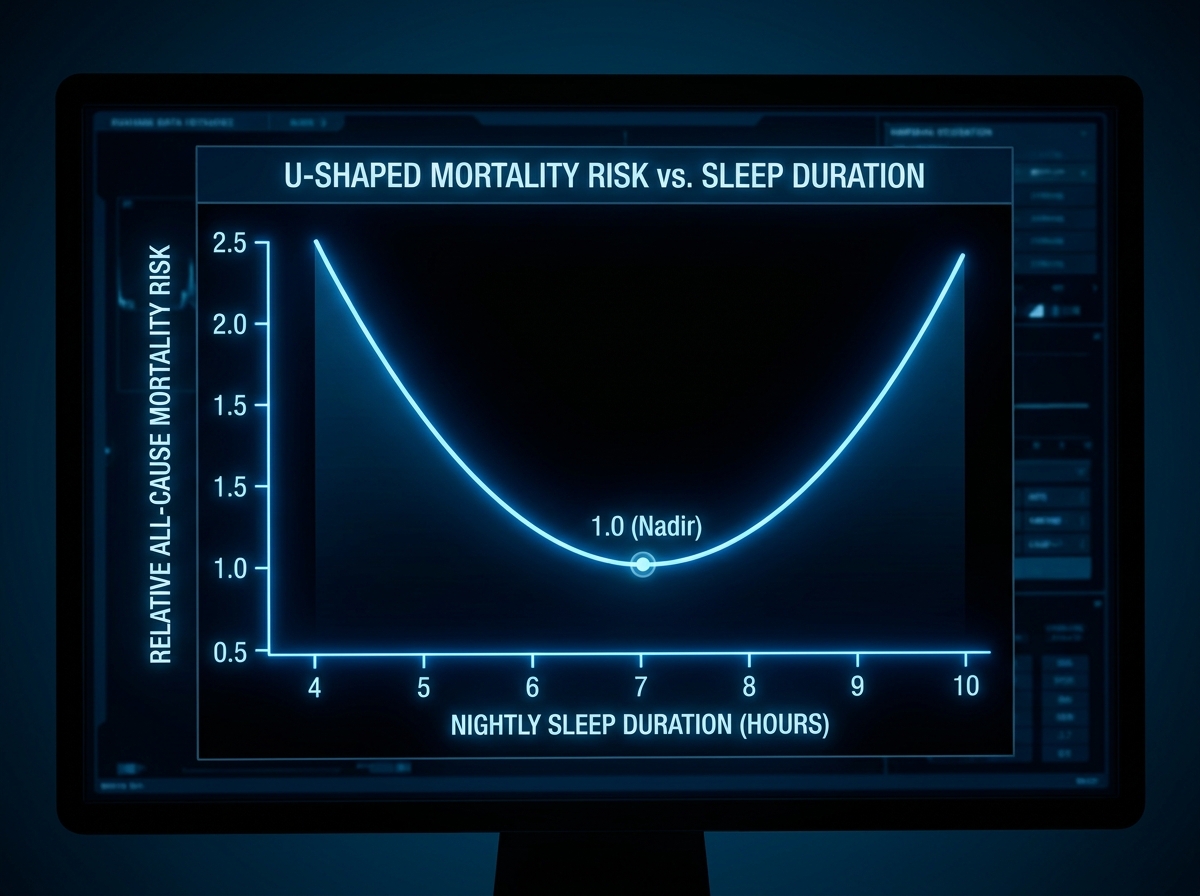
The mortality signal follows a U-shape: lowest risk sits at seven hours, with risk climbing in both directions [5][10]. A pooled analysis of 18 cohort studies put the excess cardiovascular disease risk from short sleep at 9% (RR 1.09, 95% CI 1.02–1.16) [15]. Hypertension risk climbs dose-dependently — men sleeping under six hours carry roughly 17% higher odds of developing high blood pressure compared with seven-hour sleepers [16].
Metabolically, sleep loss disrupts leptin and ghrelin signaling, driving hunger toward energy-dense foods and eroding insulin sensitivity. This creates a feedback loop that's especially punishing for men already managing borderline glucose or visceral fat. For a broader look at modifiable cardiovascular risk factors ranked by evidence strength, see our guide on what actually reduces cardiovascular risk in men over 40.
Testosterone, Fertility, and Sexual Health
Total sleep deprivation for 24–48 hours measurably suppresses serum testosterone (pooled SMD −0.64, p < 0.001), while short-term partial restriction does not produce a statistically significant drop [4]. The practical implication: a single bad night won't tank your hormones, but sustained severe sleep loss will. Elevated cortisol from HPA-axis activation during chronic sleep deprivation compounds the problem by suppressing GnRH and downstream testosterone production.
On fertility, a meta-analysis found men with sleep disorders had 27.91 million fewer total sperm (p < 0.001), reduced progressive motility, and worse morphology versus controls [13]. Data from the PRESTO cohort showed fecundability peaked at eight hours of sleep per night — men sleeping under six hours had a fecundability ratio of just 0.62 versus eight-hour sleepers [12]. If you're evaluating hormonal status alongside sleep, DudeMeds offers telehealth hormone assessment that includes sleep history intake. For context on the broader hormone optimization landscape, the hormone optimization treatment hub covers TRT, peptides, and lifestyle protocols.
Sleep deprivation's vascular and endocrine consequences — endothelial dysfunction, suppressed testosterone, metabolic syndrome — are each independent risk factors for erectile dysfunction. Men reporting low libido or ED should have sleep duration assessed before jumping to pharmacologic interventions. Our coverage of low libido in men over 40 walks through that diagnostic hierarchy.
Treatment: CBT-I First, Medications With Caution
Cognitive behavioral therapy for insomnia (CBT-I) is first-line per AASM guidelines, producing moderate-to-large improvements in sleep parameters that persist at 12 months [3]. It outperforms medication on long-term outcomes without the dependency or cognitive side-effect risks.
Pharmacologic options — orexin antagonists, Z-drugs, melatonin agonists — offer short-term relief but carry real downsides. The FDA's boxed warning on eszopiclone, zaleplon, and zolpidem followed documentation of 20 deaths and 46 serious injuries from complex sleep behaviors including sleep-driving and falls [8]. For men in safety-sensitive occupations, that risk profile is not academic. If you're using any sleep aid alongside other compounds, Peter MD provides clinician oversight that covers drug interaction screening.
Frequently asked questions
How many hours of sleep do men actually need for optimal health?
Seven hours per night represents the evidence-based sweet spot for minimizing mortality and disease risk in men [5][10]. Both falling below six hours and regularly exceeding nine hours associate with higher all-cause mortality, cardiovascular events, and impaired metabolic function. Individual variation exists, but the bulk of population-level data converges on seven to eight hours as the protective range.
Does poor sleep lower testosterone in men?
Total sleep deprivation lasting 24 hours or more significantly lowers serum testosterone, with a pooled standardized mean difference of −0.64 in controlled studies [4]. Short-term partial restriction — losing an hour or two for a few nights — does not produce a statistically detectable drop on its own, though chronic cortisol elevation from sustained poor sleep suppresses the HPG axis over time. Men with symptoms of low testosterone should be evaluated for sleep disorders before assuming primary hypogonadism.
What is the most effective treatment for chronic insomnia in men?
CBT-I is the most effective long-term treatment for chronic insomnia disorder, recommended as first-line therapy by the AASM, with improvements in sleep onset, maintenance, and insomnia severity that outlast pharmacologic effects at 12-month follow-up [3]. Sleep medications provide faster symptom relief but carry dependency risk, cognitive side effects, and — in the case of Z-drugs — FDA-mandated boxed warnings for serious complex sleep behaviors [8]. CBT-I should be the starting point; medication considered only as short-term adjunct when needed.
Nutrition & Metabolic Health Specialist · 8+ years specializing in men's nutrition, Extensive training in clinical nutrition and metabolism
Taylor is a nutrition specialist focusing on men's metabolic health and weight management. With deep expertise in therapeutic nutrition for hormone disorders, Taylor researches and explains how nutrition impacts testosterone, metabolism, and overall male wellness.
Tools and references for this topic
Free calculators and reference charts built from the same sources as this article.
- CalculatorTestosterone Dose Calculator — Weekly mg to mL and Syringe Units
- CalculatorTestosterone Levels by Age — Reference Range Chart (Travison 2017)
- CalculatorVial Duration Calculator: How Long a Vial or Pen Lasts
- CalculatorTRT Cost Calculator — Cost Per Month, With and Without Insurance
- ComparisonTRT vs hCG — Two Approved Drugs, One Shared Indication