Which Supplements Actually Improve REM, Deep Sleep, and Sleep Latency in 2026
The evidence-backed short list is shorter than the supplement aisle suggests: melatonin, ashwagandha, magnesium, and a newer botanical called corn leaf extract (CLE) all show statistically significant effects on objective sleep metrics in randomized controlled trials. Everything else — valerian, chamomile, most proprietary blends — lacks consistent trial support and isn't worth the spend.
If poor sleep is compressing your testosterone, wrecking your recovery, or bleeding into your mood, the science on what sleep deprivation does to the male body is a useful baseline before stacking supplements on top of a structural problem.
Ashwagandha: The Strongest Case for Sleep Latency and Efficiency
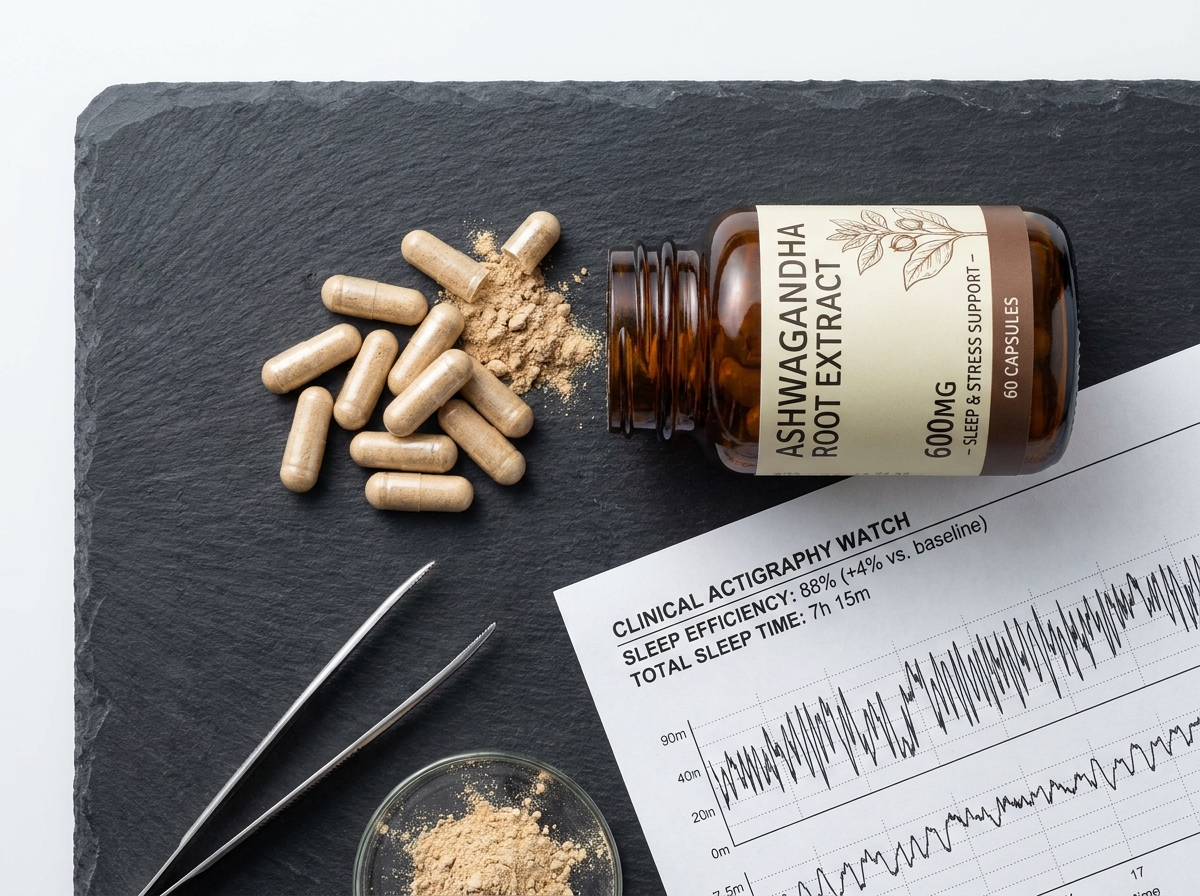
Standardized ashwagandha root extract (KSM-66 or Shoden) is the best-supported single supplement for sleep onset latency (SOL) and sleep efficiency in men. In a 10-week double-blind RCT (n=60), 600 mg/day reduced SOL to 29 minutes versus 34 minutes for placebo, and pushed sleep efficiency from 75.6% to 83.5% [2]. A parallel trial in both healthy adults and insomnia patients confirmed SOL (p<0.0001) and sleep efficiency (p<0.0001) as the most improved parameters [3]. A five-trial meta-analysis found SMD = −0.59 (95% CI −0.75 to −0.42), with larger effects at ≥600 mg/day for ≥8 weeks [5].
A head-to-head RCT (n=200) compared ashwagandha 300 mg twice daily, melatonin 3 mg, their combination, and placebo over 8 weeks. The combination arm produced the largest reductions in SOL, WASO, and improvements in total sleep time — but ashwagandha monotherapy held its own against melatonin monotherapy [8]. For men specifically, ashwagandha's secondary effects on cortisol and possibly testosterone make it a logical anchor supplement. Men managing hormone health through a structured protocol can find provider options at DudeMeds, which covers TRT alongside broader hormone optimization.
Dose: 300 mg twice daily of standardized extract. Expect 4–6 weeks before meaningful change. Cost: roughly $20–$40/month.
Melatonin: Reliable for Latency, Modest on Architecture
Melatonin's effect size is real but limited. A 19-study meta-analysis (n=1,683) found it reduces sleep latency by ~7 minutes and increases total sleep time by ~8 minutes [11]. A dose-response meta-analysis of 26 RCTs identified ~4 mg taken 3 hours before target bedtime as the optimal regimen — a substantial departure from the common habit of swallowing 10 mg right before lights-out [12].
Melatonin does not reliably increase deep NREM or REM sleep. Its mechanism is chronobiotic, not architecture-shaping — it shifts circadian phase rather than restructuring sleep stages. For men with delayed sleep phase or shift-work schedules, it's the right tool. For men with fragmented sleep and poor REM, it's insufficient alone. The American Academy of Sleep Medicine's guideline issues a weak recommendation against melatonin for chronic insomnia [11], which tracks: CBT-I outperforms it, and ashwagandha matches it on SOL with broader systemic upside.
Dose: 0.5–4 mg, 2–3 hours before bed. Cost: $5–$15/month. Don't self-dose to 10–20 mg — no evidence it helps, and there's theoretical concern around HPG-axis interference at chronic high doses.
Corn Leaf Extract: The Newcomer With REM-Specific Data
Corn leaf extract (CLE, 500 mg, standardized from Zea mays leaves) is the only supplement in this category with published trial data showing a direct increase in measured REM sleep time. In a 28-day triple-blind RCT (n=80), CLE increased REM by 8.27 minutes (d=0.50, p=0.028) and total sleep time by 35 minutes (d=0.55, p=0.033) versus placebo [1]. WASO dropped by nearly 18 minutes at day 14 (p=0.021) [1]. These are objective, actigraphy- and EEG-confirmed numbers — not self-report.
The mechanism isn't fully mapped, but GABAergic and adenosine pathways are implicated. CLE is new enough that long-term and sex-specific data don't exist yet, and quality control across brands is unverified. Still, for men specifically concerned about REM deficits — which correlate with mood dysregulation and impaired stress recovery — CLE warrants attention. Pair this with broader reading on supplements with benefits men didn't expect to contextualize where it fits. A 30-day supply runs $25–$45. Take it 60 minutes before bed and judge after two weeks, not two days.
Clinicians integrating supplements into a broader hormone optimization protocol should note that none of these agents replace structural interventions — and undiagnosed sleep apnea will blunt every supplement on this list.
Frequently asked questions
What supplement most reliably reduces time to fall asleep?
Ashwagandha (600 mg/day of standardized extract for ≥8 weeks) produces the most consistent reduction in sleep onset latency across multiple RCTs and a published meta-analysis, outperforming melatonin in head
What is the optimal dose and timing of melatonin for improving sleep latency?
The optimal melatonin regimen identified in research is approximately 4 mg taken 3 hours before your target bedtime, not the high-dose immediate approach most people use. A dose-response meta-analysis of 26 RCTs established this timing and dosage as the most effective protocol, representing a significant departure from the common habit of taking 10 mg right at lights-out. Doses in the 10–20 mg range have no additional evidence of benefit and carry theoretical concern around HPG-axis interference with chronic use.
How does ashwagandha compare to melatonin when taken together versus separately?
Taking ashwagandha and melatonin in combination produces larger sleep improvements than either supplement alone, based on a head-to-head RCT of 200 participants. Over 8 weeks, the combination arm showed the greatest reductions in sleep onset latency and wake after sleep onset, along with the largest gains in total sleep time. Notably, ashwagandha monotherapy at 300 mg twice daily held its own against melatonin monotherapy across those same metrics.
Nutrition & Metabolic Health Specialist · 8+ years specializing in men's nutrition, Extensive training in clinical nutrition and metabolism
Taylor is a nutrition specialist focusing on men's metabolic health and weight management. With deep expertise in therapeutic nutrition for hormone disorders, Taylor researches and explains how nutrition impacts testosterone, metabolism, and overall male wellness.