
After Stopping Tesamorelin: Can Men Keep the Belly Fat Off?
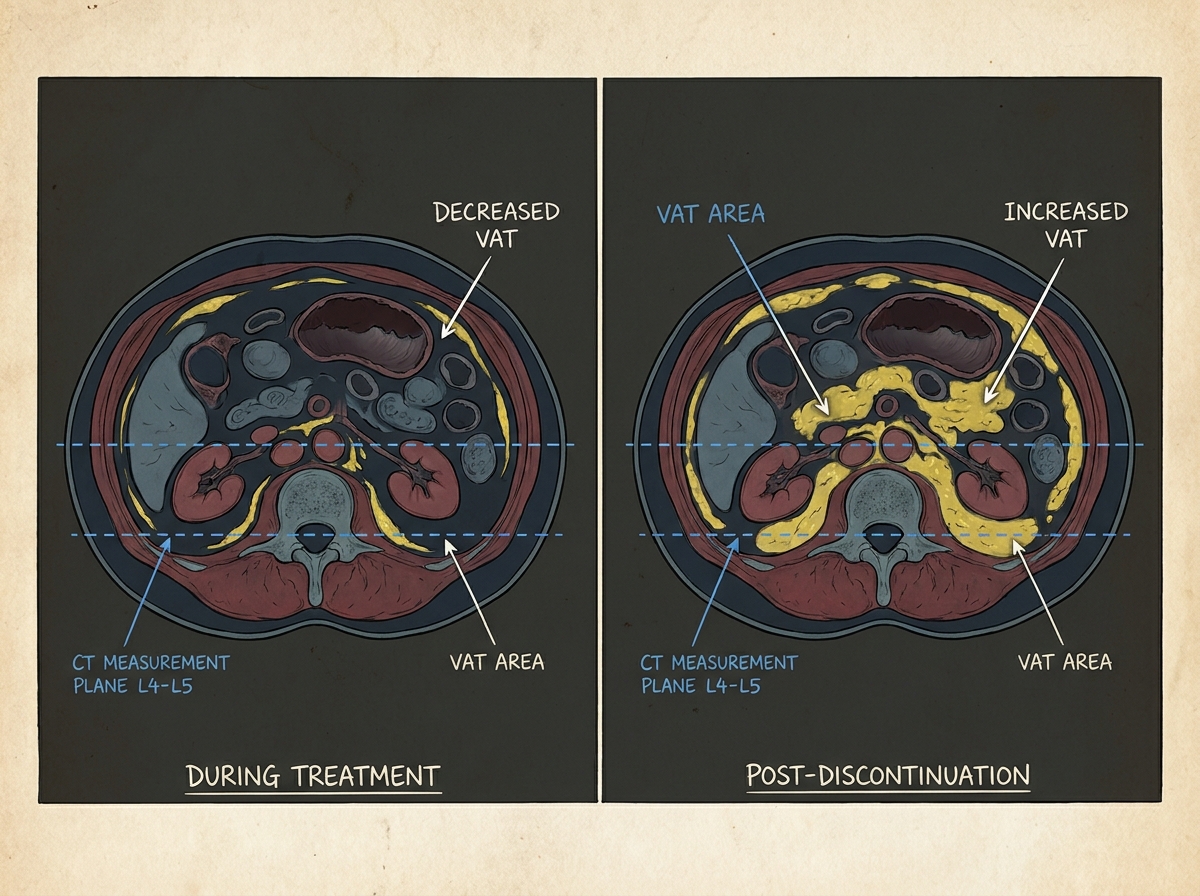
Visceral fat largely comes back after stopping tesamorelin. The clinical trial data are unambiguous: men who discontinue the protocol regain most of the visceral adipose tissue (VAT) reduction within six months unless they replace the pharmacologic stimulus with something else[4][6].
That's the honest answer. Here's what you can do about it.
Starting from
$85.95
N/A consultation

4.2 AHF · 4.2 Trustpilot
Best-in-class third-party testing for research compounds at competitive pricing — the legitimacy floor in a market full of untested suppliers.
Get Started FreeWhat the Extension Trials Actually Show
The pivotal 26-week HIV lipodystrophy trial — 86% male — showed tesamorelin 2 mg/day reduced VAT by 15.2% versus a 5% increase in the placebo arm[1]. The 12-month rerandomization trial sharpened the discontinuation picture: patients who switched from tesamorelin to placebo at month six lost most of their VAT reduction progressively over the back half of the year, while those who continued treatment held approximately 18% below baseline at 52 weeks[4][6].
The 52-week extension data put numbers on the regain: patients who stopped tesamorelin at week 26 had VAT levels approaching roughly 80% of their original baseline by week 52[6][8]. That means if a man dropped 25 cm² of visceral fat on protocol, he's looking at recovering perhaps 15–20 cm² of that within six months of stopping. A small minority (~40%) retained some measurable reduction at six-month follow-up, but this residual effect wasn't statistically significant in intent-to-treat analyses[6].
One metabolic bright spot: hepatic markers (ALT/AST) and triglyceride improvements sometimes persisted beyond the anatomical VAT changes, suggesting some cardiometabolic benefit lingers even after VAT rebounds[6][9].
What Can Slow the Regain
The GH/IGF-1 axis returns to its pre-treatment equilibrium once tesamorelin is withdrawn — this is a built-in mechanistic feature, not a flaw in the compound[1][13]. So durable results require either continuing the research protocol or applying sufficient counterpressure through other means.
Practically, the levers researchers and their subjects work with post-protocol include:
Resistance training + caloric control. Visceral fat is metabolically sensitive to both energy deficit and muscle-driven glucose disposal. Neither erases the loss of GH/IGF-1 stimulation, but men who sustain structured resistance training post-protocol consistently show slower VAT reaccumulation in observational data.
GLP-1 receptor agonists. Semaglutide and tirzepatide reduce VAT through a complementary mechanism — primarily via caloric deficit and insulin sensitization. Stacking or sequencing a GLP-1 agent post-tesamorelin is the most pharmacologically defensible bridge strategy available right now. For men serious about cardiometabolic outcomes, our guide on what actually reduces cardiovascular risk in men over 40 covers the full intervention hierarchy.
Testosterone optimization. Low-normal testosterone accelerates VAT accumulation. Men who let T drift back toward hypogonadal range post-protocol will see visceral fat return faster. This isn't a replacement for tesamorelin, but it removes a compounding negative.
Researchers sourcing tesamorelin for ongoing protocols can compare current supply options and pricing at NextGen Peptides, which maintains research-grade inventory. For a broader look at peptide research applications, the advanced therapies hub covers tesamorelin alongside CJC-1295, ipamorelin, and other GH-axis compounds.
The Realistic Framing for Researchers
Tesamorelin is not a permanent reset. It's a potent, reversible VAT-reduction tool that works while you use it. The clinical data from HIV cohorts — overwhelmingly male — show consistent 15–21 cm² VAT reductions during active treatment[1][4][17], with regression toward baseline after cessation. That's not a failure of the compound; it's a function of how the GH/IGF-1 axis works.
The practical implication: men who use tesamorelin as a short-term intervention to reduce cardiometabolic risk or visceral burden, then transition to aggressive lifestyle + GLP-1 maintenance, can potentially hold a meaningful fraction of the reduction. Men who stop everything and return to prior habits will largely return to prior body composition. The research here is consistent enough to take a firm position on it[4][6][8].
Sleep quality also matters more than most protocols account for — what sleep deprivation does to the male body covers how poor sleep independently drives visceral fat accumulation through cortisol and GH suppression, which is directly relevant to post-tesamorelin maintenance. Marek Health offers monitoring panels that can track IGF-1, metabolic markers, and body composition during and after peptide research protocols.
Frequently asked questions
Does visceral fat always return after stopping tesamorelin?
In the majority of men, visceral fat does return substantially after stopping tesamorelin — extension trial data show approximately 80% of the VAT reduction is lost within six months of discontinuation[6][4]. A subset of roughly 40% of subjects retained some measurable reduction at six-month follow-up, but this was not statistically significant in intent-to-treat analyses. The degree of regain depends heavily on whether lifestyle interventions or adjunctive therapies are maintained post-protocol.
How long does it take for belly fat to come back after stopping tesamorelin?
Visceral fat reaccumulation begins within weeks of stopping tesamorelin and accelerates progressively
How much visceral fat do men typically regain within six months of stopping tesamorelin?
Men who stop tesamorelin regain most of their visceral fat reduction within six months, with VAT levels approaching roughly 80% of original baseline by week 52. In practical terms, a man who lost 25 cm² of visceral fat on protocol can expect to recover approximately 15–20 cm² of that within six months of stopping. Only about 40% of subjects retained any measurable reduction at six-month follow-up, and even that residual effect was not statistically significant in intent-to-treat analyses.
Nutrition & Metabolic Health Specialist · 8+ years specializing in men's nutrition, Extensive training in clinical nutrition and metabolism
Taylor is a nutrition specialist focusing on men's metabolic health and weight management. With deep expertise in therapeutic nutrition for hormone disorders, Taylor researches and explains how nutrition impacts testosterone, metabolism, and overall male wellness.