Finasteride vs Dutasteride for Male Hair Loss: Which 5-Alpha Reductase Inhibitor Wins in 2026?
Dutasteride produces meaningfully greater hair density gains than finasteride — roughly 28 more hairs per target area over 24 weeks in pooled trials [7] — but finasteride remains the only FDA-approved oral option for male pattern hair loss and carries a longer real-world safety record. Which one belongs in your protocol depends on where you are in your hair-loss progression and how much systemic DHT suppression you're comfortable accepting.
Starting from
$99.99/mo
Free consultation

4.2 AHF · 4.2 Trustpilot
Affordable multi-modality TRT with board-certified physicians + at-home labs + coaching — broader access than mass-market without the premium-concierge tier.
Get Started FreeHow They Actually Work — and Where They Differ
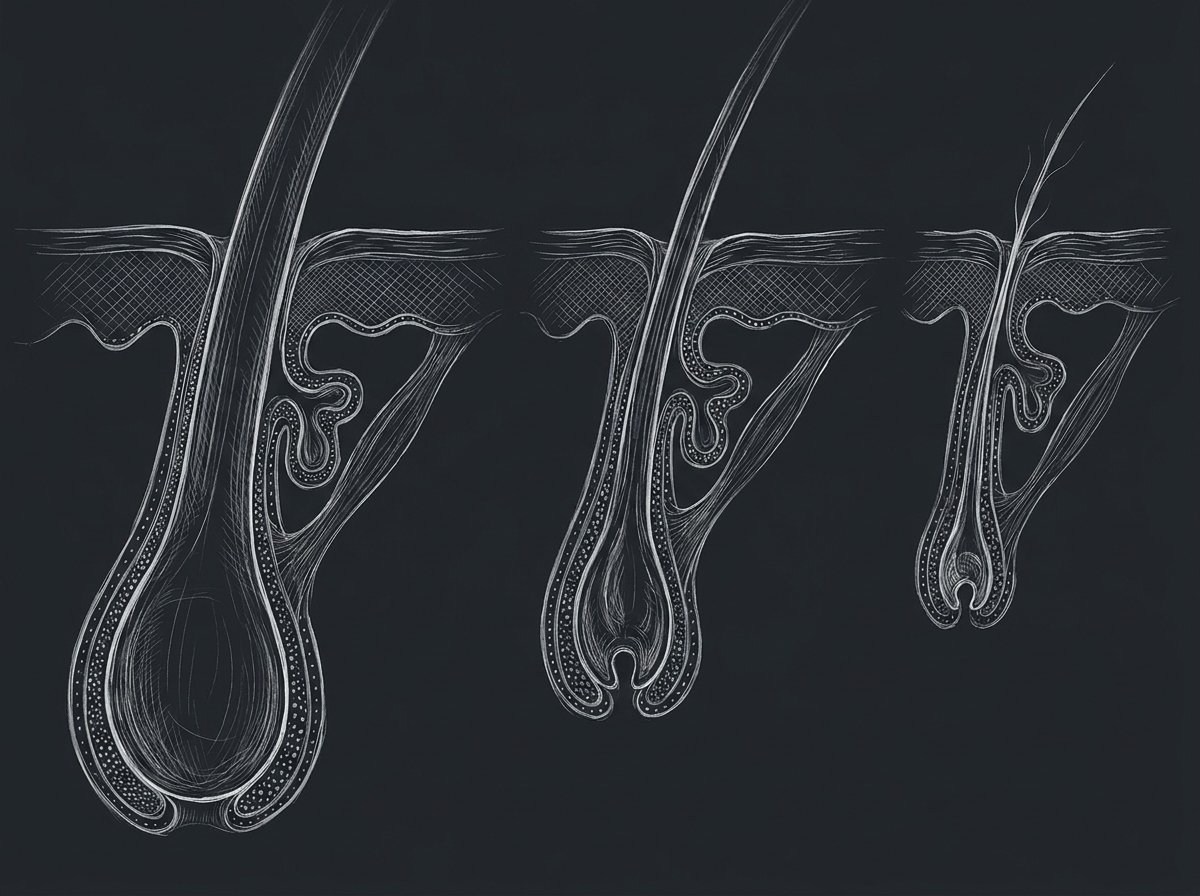
Both drugs block the enzyme that converts testosterone into dihydrotestosterone (DHT), the androgen that miniaturizes scalp follicles. Finasteride targets only the type II isoform, cutting serum DHT by roughly 70%. Dutasteride hits both type I and type II, pushing DHT suppression above 90% [5]. That dual blockade is the entire mechanistic argument for dutasteride's edge.
In the pivotal 24-week head-to-head RCT (917 men, ages 20–50), dutasteride 0.5 mg daily outperformed finasteride 1 mg daily on hair count, shaft width, and frontal photographic assessment — all with P ≤ 0.004 [5]. Longer-term, a 5-year cohort of men on finasteride showed strong rates of visible improvement, but efficacy dropped meaningfully at higher Norwood stages and in men who started treatment after age 40 [6]. The practical read: start early, regardless of which drug you choose.
Finasteride's long-term tolerability data across tens of thousands of patients in placebo-controlled trials is a genuine asset [2][3][4]. Dutasteride's much longer half-life — measured in weeks, not hours — means if side effects emerge, they linger longer after you stop. That's a real tradeoff worth discussing with a prescriber before switching. You can compare telehealth providers who prescribe both at Alpha Health Finder's hair restoration treatment hub.
Who Should Consider Dutasteride Over Finasteride
Dutasteride makes clinical sense for men who've taken finasteride for 12+ months with adequate adherence and still see progression, or for men presenting with Norwood IV–V loss who want maximum pharmacologic effect upfront. Meta-analysis confirms the efficacy advantage is consistent across trials, not a single-study artifact [7][8].
The sexual side effect rates in randomized trials are low and statistically comparable between the two drugs — but post-marketing reports and persistent post-finasteride syndrome discussions on forums complicate the picture. Neither drug is risk-free; the honest framing is that most men tolerate both well, and the subset who don't can usually discontinue and resolve symptoms faster with finasteride given its shorter half-life.
If you're weighing providers, Dude Meds offers both finasteride and off-label dutasteride protocols with async prescriber consults. For context on how these oral agents stack up against topical alternatives, see our deep-dive on deoxyribose gel vs minoxidil for hair loss in men and our review of He Shou Wu and hair loss — does the science hold up.
Related reading
- Topical Dutasteride vs Topical Finasteride: Which Wins for Hair Restoration in 2026?
- Pyrilutamide vs Finasteride for Men: Which Hair Loss Treatment Wins in 2026?
Frequently Asked Questions
Is dutasteride FDA-approved for hair loss?
Dutasteride is not FDA-approved for male pattern hair loss as of 2026 — it is approved only for benign prostatic hyperplasia under the brand name Avodart. Dermatologists prescribe it off-label for androgenetic alopecia based on robust trial data, including a direct head-to-head RCT showing superiority over finasteride at 24 weeks [5]. Off-label use is legal when prescribed by a licensed physician.
How long does finasteride take to show results?
Most men on finasteride 1 mg daily see measurable hair count improvement by month 6, with continued gains through 24 months in controlled trials [2][4]. Stabilization — stopping further loss — often appears before visible regrowth. If you see no response after 12 months of consistent daily use, that's a reasonable threshold to reassess with your prescriber, potentially considering a switch to dutasteride.
Can you switch from finasteride to dutasteride?
Yes, switching is straightforward — stop finasteride and start dutasteride 0.5 mg daily the next day. There is no washout period required. The main consideration is managing expectations: dutasteride's longer half-life means it takes several weeks to reach steady-state tissue concentrations, so don't expect an overnight improvement. Some men use Peter MD for off-label dutasteride prescriptions with baseline labs included in the consult fee.
Alpha Health Finder Editorial Team
Editorial Team
The Alpha Health Finder editorial team researches and writes evidence-based men's health content. Articles are grounded in cited primary sources and reviewed against a fixed editorial standard before publication. We are a research and directory team — not your prescribing clinicians.
Tools and references for this topic
Free calculators and reference charts built from the same sources as this article.
- CalculatorHair Loss Results Timeline — Minoxidil and Finasteride, by the Label
- ComparisonFinasteride vs Dutasteride — Only One Is Approved for Hair in the US
- BrandPropecia: The 1 mg Finasteride, and Why the Coating Matters
- ComparisonFinasteride vs Minoxidil — Both Approved, and Usually Used Together
- CalculatorTopical Finasteride Calculator — Concentration & Dilution Chart