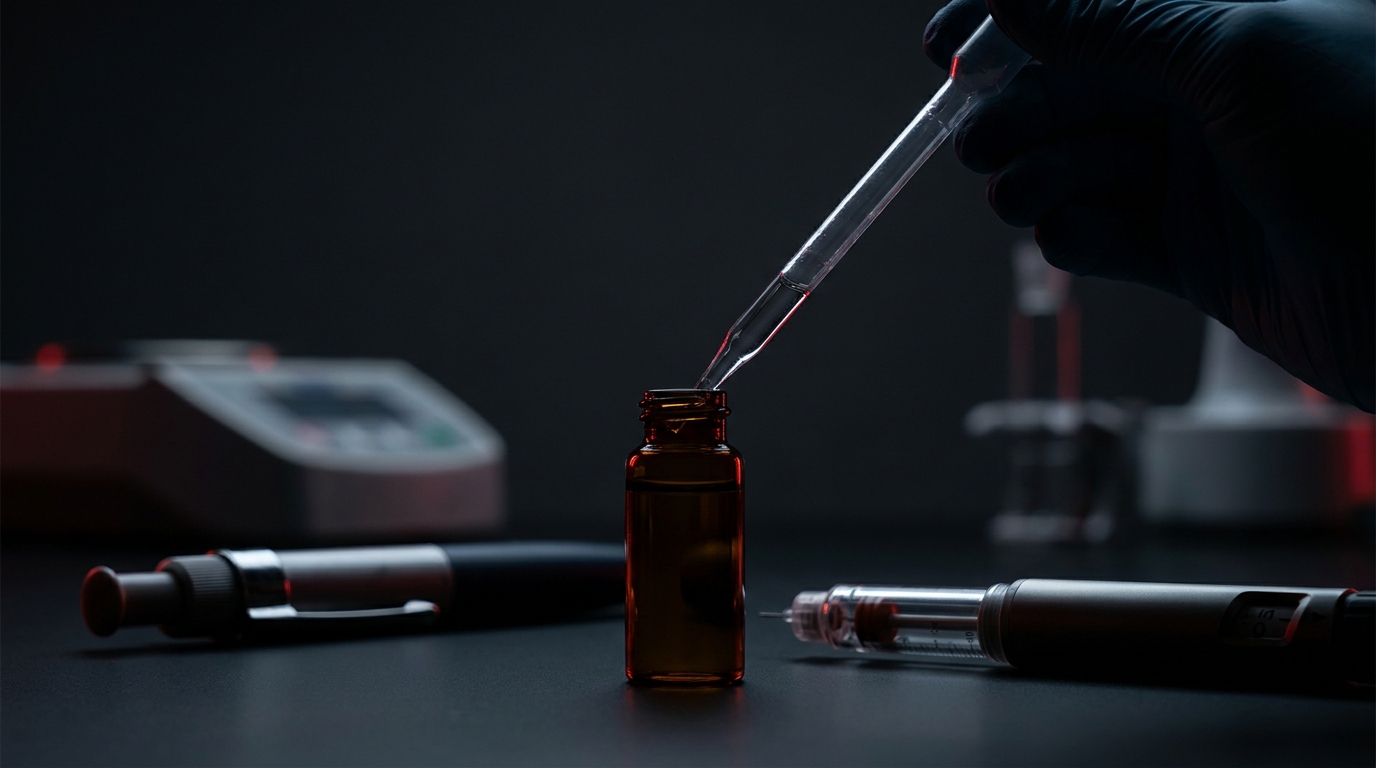
Pyrilutamide vs Finasteride for Men: Which Hair Loss Treatment Wins in 2026?
Finasteride is the proven standard for male androgenetic alopecia (AGA), backed by decades of randomized trial data — but pyrilutamide (KX-826) is emerging as a credible topical alternative that blocks androgen receptors locally without suppressing systemic DHT. The core tradeoff is certainty versus side-effect profile: finasteride works, but carries real sexual dysfunction risk; pyrilutamide looks promising and cleaner, but remains unapproved.
Starting from
$4/dose
Free consultation

4.1 AHF · 4.2 Trustpilot
Lowest-priced sildenafil in telehealth — async-light intake fits straightforward ED, not cases that need workup.
Get Started FreeHow Each Drug Actually Works
Finasteride inhibits type II 5-alpha reductase, cutting serum and scalp DHT by roughly 60–70% [2]. That systemic hormone reduction is both its strength and its liability — it reaches follicles throughout the scalp, but it also lowers DHT everywhere else in the body. The European S3 guideline rates finasteride 1 mg daily at the highest evidence level for slowing progression and inducing regrowth in Hamilton–Norwood II–V men [2].
Pyrilutamide takes a different route. As a nonsteroidal androgen receptor antagonist applied topically, it blocks DHT from activating ARs inside scalp follicles without touching systemic hormone levels [5]. Kintor Pharmaceuticals reports the compound is rapidly metabolized to inactive byproducts once absorbed systemically, which would explain the absence of endocrine side effects in trials so far [7]. Think of it as a lock-blocker rather than a key-remover.
For a side-by-side look at how 5-alpha reductase inhibitors compare among themselves, see our breakdown of finasteride vs dutasteride for male hair loss.
Efficacy: What the Numbers Actually Show
Finasteride's evidence base is definitive. A meta-analysis by Mella et al. found men on finasteride 1 mg daily were 1.81 times more likely to report improvement than placebo recipients in the short term [2]. In one Indian RCT, finasteride produced a net gain of roughly 30 hairs in a target area versus placebo at 12 months [2]. Vertex response is stronger than frontal; combination with minoxidil pushes investigator-rated improvement to ~94% versus ~80% for finasteride alone [2].
Pyrilutamide's phase III data from China reported a placebo-adjusted increase of approximately 10 hairs/cm² for the higher-dose group at 24 weeks, with statistically significant results across both dose arms [7]. Those numbers are in the range considered clinically meaningful for AGA trials. Phase II US data also hit primary endpoints [7]. The catch: results come from company press releases, not peer-reviewed publications — independent verification is still pending.
If you want to explore what deoxyribose gel offers compared to minoxidil as another topical option alongside either of these agents, that comparison is worth reading.
Safety: The Reason This Comparison Matters
A pooled analysis found finasteride 1 mg carries a relative risk of 1.66 for sexual dysfunction versus placebo, translating to roughly one additional erectile dysfunction case per 82 men treated — a real but modest absolute risk [2]. Decreased libido, ejaculatory changes, and the contested post-finasteride syndrome concern remain on the table, particularly for younger men where the cosmetic-versus-risk calculus is tightest.
Pyrilutamide's reported safety profile across phase II and III trials is notably clean: adverse event rates similar to placebo, no drug-related serious adverse events, and — critically — no signals of sexual dysfunction [5][7]. If that holds in broader real-world use, it addresses the primary reason men abandon or avoid finasteride. That's a meaningful clinical differentiator, not a minor footnote.
The practical reality today: finasteride is available, affordable (generic runs $5–30/month), and supported by international guidelines [4]. Pyrilutamide has no FDA approval as of August 2026 and cannot be legitimately prescribed in the US. Men who tolerate finasteride well have little reason to wait. Men who've experienced side effects or are unwilling to accept systemic DHT suppression have a compelling reason to watch pyrilutamide's regulatory path closely.
Men currently managing or starting AGA treatment can compare telehealth providers offering finasteride through DudeMeds or review the full landscape at our hair restoration treatment hub and online provider directory.
Related reading
Frequently asked questions
Is pyrilutamide better than finasteride for hair loss?
Pyrilutamide is not yet proven better than finasteride — its phase III data are promising but come from company press releases, not peer-reviewed trials, and no head-to-head study exists. Finasteride has 25-plus years of RCT evidence behind it. Pyrilutamide's potential advantage is a cleaner systemic safety profile, specifically the absence of DHT suppression and, so far, no sexual dysfunction signals [5][7]. Whether that advantage survives real-world use at scale remains to be established.
Can you use pyrilutamide right now in the United States?
Pyrilutamide has no FDA approval as of August 2026 and is not available through legitimate US prescribers or licensed compounders. The compound is still in clinical development; Kintor has completed phase III trials in China and phase II in the US, but regulatory submissions and approval timelines have not been publicly confirmed [7]. Men in the US currently seeking medical hair loss treatment should work with a licensed provider and review options at our hair restoration treatment hub.
How does pyrilutamide's topical application compare to finasteride's oral dosing in terms of convenience?
Alpha Health Finder Editorial Team
Editorial Team
The Alpha Health Finder editorial team researches and writes evidence-based men's health content. Articles are grounded in cited primary sources and reviewed against a fixed editorial standard before publication. We are a research and directory team — not your prescribing clinicians.