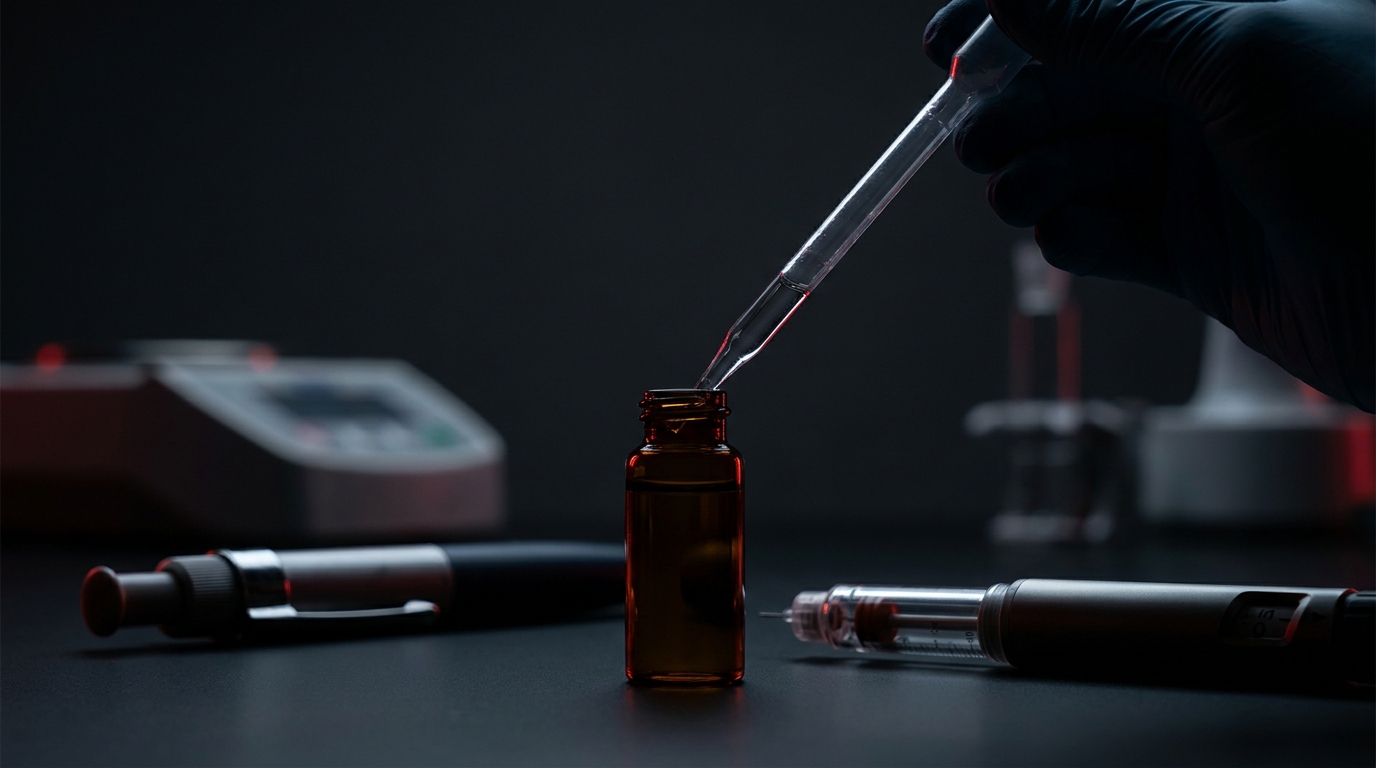
Oral Low-Dose Minoxidil vs Topical Minoxidil for Men: Which Route Wins in 2026?
Low-dose oral minoxidil (LDOM) and topical minoxidil produce broadly similar hair density gains in men with androgenetic alopecia — but they carry meaningfully different risk profiles, and the right choice depends on your tolerance for systemic side effects, not just efficacy. Here's what the clinical evidence actually shows.
Starting from
$99.99/mo
Free consultation

4.2 AHF · 4.2 Trustpilot
Affordable multi-modality TRT with board-certified physicians + at-home labs + coaching — broader access than mass-market without the premium-concierge tier.
Get Started FreeEfficacy: Comparable Results, With One Notable Caveat
The most informative head-to-head data come from a double-blind Brazilian RCT comparing oral minoxidil 5 mg daily against topical minoxidil 5% solution twice daily over 24 weeks in 90 men [1][6]. Terminal hair density improvements at the frontal and vertex scalp were statistically equivalent between groups. The one exception: blinded dermatologist photo-scoring gave oral minoxidil a 24% higher probability of vertex improvement (P = 0.04), with 70% of oral patients rated as improved versus 46% on topical [2][3]. That's a real signal, but it didn't translate into a statistically significant win on quantitative hair counts.
A separate six-month RCT comparing 1 mg oral minoxidil against 5% topical solution found both routes improved hair diameter significantly (P < 0.001), with no significant between-group difference, and patient satisfaction above 60% in each arm [4]. The takeaway is consistent across trials: LDOM at 1–5 mg/day is a viable alternative to topical 5% — not a proven upgrade.
A meta-regression of six LDOM studies adds dose context: every additional 1 mg/day was associated with +47.1 hairs/cm² in total density after six months (P = 0.007), but also a 17.9% higher hypertrichosis risk (P = 0.006) and a 4.8% higher cardiovascular adverse-event rate (P = 0.004) [5]. Efficacy and risk scale together.
For a side-by-side look at providers prescribing both formats, the hair restoration treatment hub lists current clinical options with dosing details.
Safety and Side Effects: Where the Routes Diverge
This is where the choice becomes concrete. Topical minoxidil is FDA-approved, has decades of post-market data, and confines most adverse effects to the scalp — contact dermatitis, dryness, occasional initial shedding. Systemic absorption is low under normal use conditions [7][8].
Oral minoxidil, even at sub-antihypertensive doses, circulates systemically and opens KATP channels throughout the vasculature. In the 5 mg RCT, hypertrichosis hit 49% of oral users versus 25% on topical [1][3] — unwanted facial and body hair is the single most common reason men discontinue oral therapy. Headache, fluid retention, and compensatory tachycardia are also reported. A pharmacovigilance analysis confirms that pericardial effusion, while rare at low doses, is not theoretical [5]. Cardiovascular baseline screening and periodic monitoring are standard of care before prescribing LDOM.
If you've struggled with scalp irritation, folliculitis, or poor adherence to twice-daily topical application, oral minoxidil offers a real practical advantage — one pill once daily is objectively simpler. But "simpler" isn't the same as "safer." Men with hypertension, cardiac history, or high cardiovascular risk should treat LDOM as a second-line option requiring physician oversight, not a consumer product. Platforms like Shed and PeterMD offer supervised prescribing for both routes if you want a clinician managing the risk-benefit calculus.
For a deeper look at how minoxidil compares to emerging alternatives, see our analysis of deoxyribose gel vs minoxidil for hair loss in men and our breakdown of finasteride vs dutasteride for male hair loss, which contextualizes where minoxidil fits in a multi-drug regimen. Combination therapy consistently outperforms either agent alone, regardless of minoxidil route [6].
Related reading
Frequently Asked Questions
Is oral low-dose minoxidil more effective than topical minoxidil for men?
Oral low-dose minoxidil (1–5 mg/day) produces similar overall hair density improvements to topical 5% minoxidil in randomized trials, with no statistically significant superiority on quantitative hair counts [1][4][6]. The one area where oral may edge ahead is vertex photographic improvement at higher doses, but this hasn't been replicated consistently enough to call it a definitive efficacy advantage. For most men, route choice should hinge on tolerability and safety profile rather than expecting meaningfully better regrowth from the pill.
What are the main side effects of oral minoxidil compared to topical?
The most common side effect of oral minoxidil is hypertrichosis — unwanted hair growth on the face, arms, and body — affecting roughly 49% of men on 5 mg in one RCT versus 25% on topical [1][3]. Oral minoxidil can also cause headache, mild fluid retention, and compensatory heart rate increases due to systemic vasodilation. Topical minoxidil, by contrast, largely confines adverse effects to the scalp, such as dryness and contact dermatitis, because systemic absorption remains low under normal use [7][8].
What percentage of men on oral minoxidil
Alpha Health Finder Editorial Team
Editorial Team
The Alpha Health Finder editorial team researches and writes evidence-based men's health content. Articles are grounded in cited primary sources and reviewed against a fixed editorial standard before publication. We are a research and directory team — not your prescribing clinicians.