
Low Libido in Men Over 40: What Research Actually Works vs. What Is Marketing
Reduced sex drive after 40 is real, common, and treatable — but the supplement industry has built a billion-dollar business on men who don't know the difference between a clinically validated intervention and a marketing claim. Here is what the evidence actually supports.
What the Science Says Is Driving the Problem
Testosterone declines roughly 1–2% per year after 30. Travison et al. (2007, JAMA) documented this at a population level, but the clinical picture is messier: many men retain normal levels into their 60s, while others develop true hypogonadism in their 40s. Low libido is almost never a single-variable problem. Depression, obesity, sleep apnea, cardiovascular disease, and medications — particularly SSRIs, which cause sexual dysfunction in 30–70% of users — all blunt desire independently of testosterone [2][3].
The Endocrine Society Clinical Practice Guidelines on male hypogonadism are explicit: diagnosis requires both consistently low morning testosterone (confirmed on two separate draws) and symptoms. A number below 300 ng/dL with no symptoms does not automatically warrant treatment [1][6]. Men chasing a "higher T number" without meeting diagnostic criteria are largely wasting money.
If you want a realistic baseline picture of your hormone health, annual lab testing for men over 35 covers which panels are actually worth ordering.
What Actually Works (With Effect Sizes)
Weight loss produces the most underrated results. A meta-analysis in JCEM found that diet-driven weight loss of roughly 10% raised total testosterone by ~84 ng/dL; surgical weight loss of 32% raised it by ~251 ng/dL [2]. Intensive lifestyle RCTs show that losing ~15% of body weight improves erectile function scores on the Rosen et al. International Index of Erectile Function (IIEF) by approximately 3 points — comparable to what testosterone trials deliver [2].
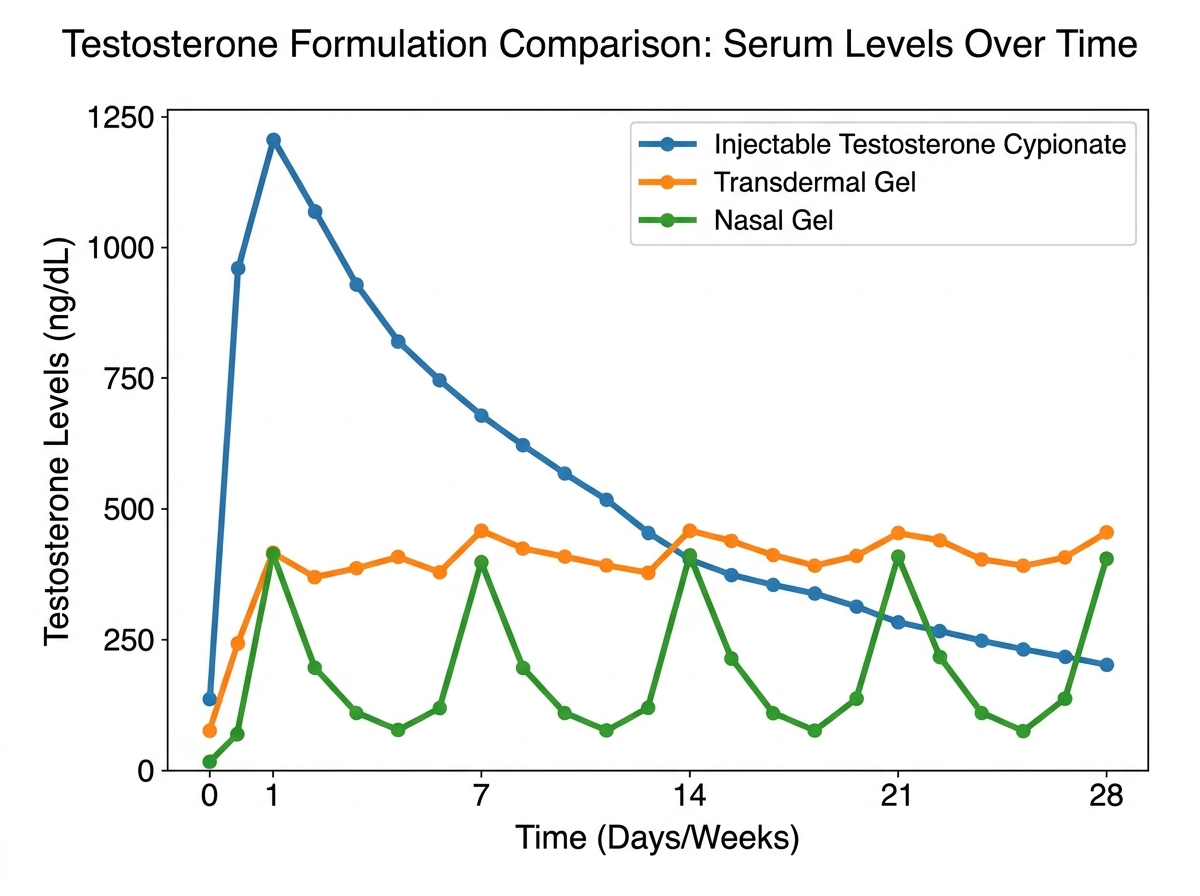
TRT in genuinely hypogonadal men works. The NIH-funded Testosterone Trials (TTrials), synthesized in Bhasin et al. 2018 (NEJM), demonstrated statistically significant improvements in sexual desire and activity in men with confirmed hypogonadism. Effect sizes are modest but real. Formulation choice matters for adherence: topical gels like AndroGel or Testim offer stable daily levels; injectables like Depo-Testosterone are cheaper but produce peaks and troughs that some men find uncomfortable. Nasal gel Natesto avoids skin-transfer risk entirely [4][7].
For men who want treatment that preserves fertility, Clomid (clomiphene) or enclomiphene/Androxal stimulate the body's own testosterone production via SERM activity rather than suppressing the HPG axis. These are worth discussing with a prescribing clinician — telehealth providers like DudeMeds can evaluate and prescribe both TRT and SERM-based protocols with lab monitoring.
What Is Mostly Marketing
Over-the-counter "testosterone boosters" — ashwagandha, fenugreek, zinc stacks, D-aspartic acid — generate enormous revenue and produce underwhelming results in men who are not frankly deficient. Zinc supplementation raises testosterone only in men who are zinc-deficient. Ashwagandha shows small reductions in cortisol with marginal downstream testosterone effects. None of these compounds have been tested against placebo in adequately powered trials for libido as a primary endpoint [3].
Maca root is a partial exception: a small double-blind RCT found that 3.0 g/day improved libido scores in men with SSRI-induced sexual dysfunction — but it did not alter serum testosterone, and the sample was 20 people [17 per research bundle]. Promising and narrow, not a general solution.
Direct-to-consumer marketing also aggressively conflates erectile dysfunction with low libido. They are distinct conditions that often coexist but require different workups. PDE5 inhibitors like sildenafil improve erections; they do not reliably increase sexual desire. Men who lack desire but can achieve erections are not PDE5 candidates. Getting this diagnostic distinction right matters before spending money on any treatment. For a broader look at what supplements and drugs genuinely move the needle on sexual function, see the evidence-based supplement stack for libido and erections in 2026.
If you want to compare clinicians and protocols before committing, the hormone optimization treatment hub covers current TRT, SERM, and peptide options with provider comparisons. Men who've already done the research often find working with a specialized men's health provider faster than navigating primary care, which frequently under-tests and under-treats hypogonadism.
Related reading
Frequently asked questions
Does low testosterone always cause low libido in men over 40?
Low testosterone is one cause of low libido, but not the only one — or even the most common in otherwise healthy men. Depression, relationship stress, poor sleep, obesity, and medications like SSRIs all suppress desire independently of testosterone levels [3]. Per the Endocrine Society Clinical Practice Guidelines, a diagnosis of hypogonadism requires both consistently low testosterone and symptoms; many men with borderline testosterone have normal libido, and some men with low libido have entirely normal testosterone [1][6].
How long does TRT take to improve libido?
Most men with confirmed hypogonadism report noticeable improvements in sexual desire within 3–6 weeks of reaching therapeutic testosterone levels [4][7]. The
Nutrition & Metabolic Health Specialist · 8+ years specializing in men's nutrition, Extensive training in clinical nutrition and metabolism
Taylor is a nutrition specialist focusing on men's metabolic health and weight management. With deep expertise in therapeutic nutrition for hormone disorders, Taylor researches and explains how nutrition impacts testosterone, metabolism, and overall male wellness.
Tools and references for this topic
Free calculators and reference charts built from the same sources as this article.
- CalculatorED Medication Timing: Viagra vs Cialis vs Levitra vs Stendra
- CalculatorED Cost Per Dose — What a Pharmacy Pays for Each Tablet
- CalculatorTestosterone Dose Calculator — Weekly mg to mL and Syringe Units
- CalculatorTestosterone Levels by Age — Reference Range Chart (Travison 2017)
- CalculatorVial Duration Calculator: How Long a Vial or Pen Lasts