What Actually Improves Energy and Productivity in Men: A 2026 Data-Driven Survey
Sleep deprivation, untreated medical conditions, and chronic stress account for more male energy complaints than low testosterone does — and the interventions with the strongest evidence reflect that reality. Here's what the clinical data actually support.
The Highest-Yield Interventions: Sleep and Exercise
Sleep is the most evidence-backed lever men have. A meta-analysis of 19 studies (1,932 participants) found that sleep loss strongly impairs mood, cognition, and motor performance — with mood more affected than reaction time [9]. That matters practically: men often "push through" tasks while sleep-deprived, but creative output, decision quality, and sustained motivation erode first, exactly where modern knowledge-work productivity lives.
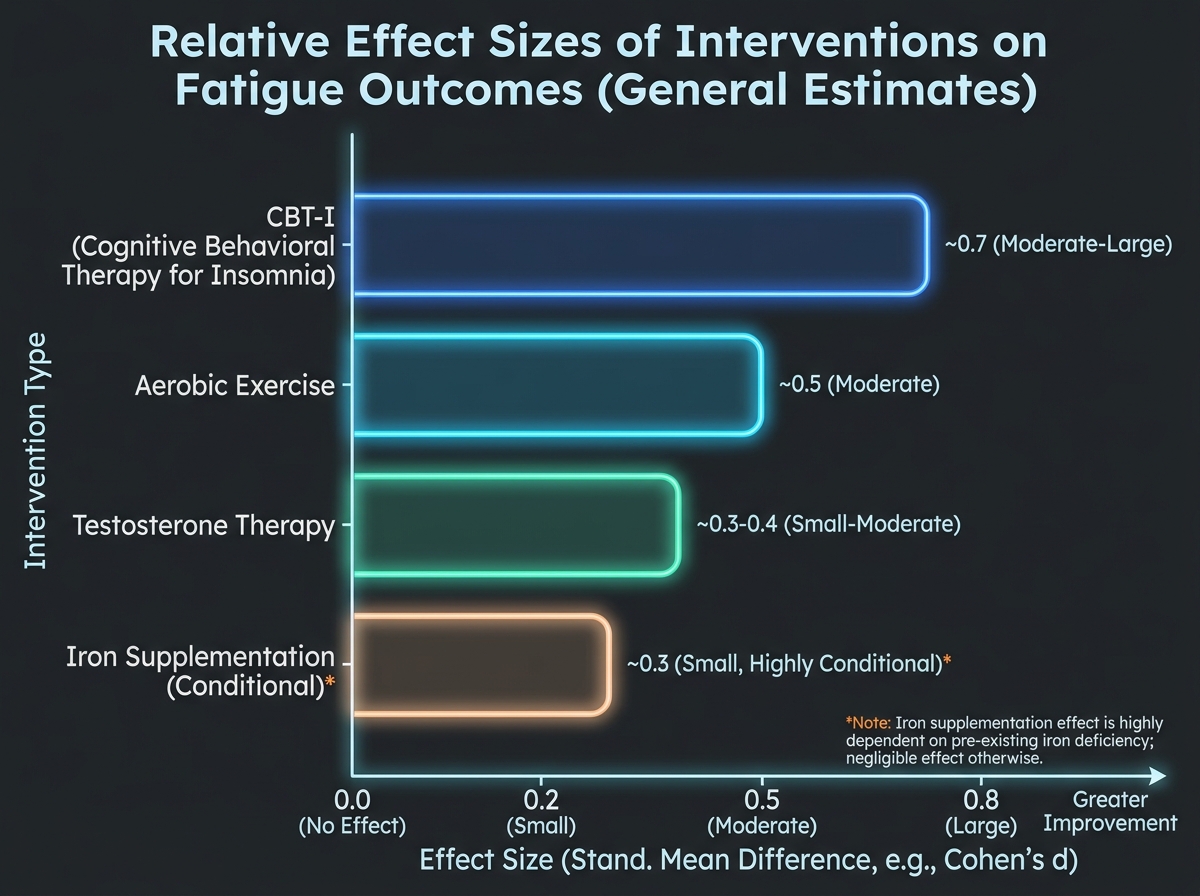
Cognitive-behavioral therapy for insomnia (CBT-I) outperforms medication in the long run. In a 160-person RCT, CBT-I alone produced significant improvements in fatigue, mental quality of life, and anxiety after six weeks — whereas the CBT-plus-zolpidem group did not show the same gains during acute treatment [18]. Effects held at six-month follow-up. Digital CBT-I programs run $30–$100 for multi-week access, making this the best cost-to-benefit ratio in men's energy management. See our caffeinated gum and alertness deep-dive for how stimulants compare as a short-term patch when sleep debt is unavoidable.
Aerobic exercise is the other tier-one intervention. In an 8-week RCT of 66 young adults with major depressive disorder, moderate-intensity exercise reduced depressive symptoms with an effect size of ~0.66 — moderate to large [16]. Since depression and low energy are often the same clinical problem wearing different labels, this translates directly to energy and work output. Aim for 150 minutes of moderate aerobic work weekly; meaningful gains appear within four to six weeks.
Hormones and Micronutrients: Targeted, Not Universal
Testosterone is widely assumed to be the primary energy driver in men. The evidence is more modest. The Testosterone Trials — seven coordinated placebo-controlled trials in 788 men averaging age 72 — found that one year of TRT improved sexual function and modestly lifted mood, but did not hit the prespecified threshold for vitality improvement on a validated fatigue scale [6]. A separate meta-analysis of RCTs in hypogonadal men confirmed significant gains in sexual desire and erectile function but no statistically significant effect on energy or mood [10]. TRT is appropriate when biochemical hypogonadism is confirmed; it's a poor bet as a generic energy drug. Men exploring options can compare evidence-based TRT programs at DudeMeds or review the broader landscape at our hormone optimization treatment hub.
Iron deficiency — even without anemia — is a legitimately underdiagnosed energy drain in men. A systematic review found iron supplementation reduced subjective fatigue scores (SMD −0.38) in non-anemic iron-deficient adults, though objective work capacity didn't change significantly [15]. If ferritin is low-normal and you have unexplained fatigue, a monitored course of ferrous sulfate ($5–$15/month) is worth discussing with your physician before pursuing more expensive interventions.
Vitamin D is context-dependent. It improved fatigue in perimenopausal women with deficiency [13] and in post-COVID patients [20], but high-dose intermittent vitamin D did nothing for chronic fatigue syndrome patients [19]. The takeaway: correct documented deficiency, but don't expect it to work as a broad energy supplement.
Ashwagandha (240 mg/day standardized extract) reduced cortisol and anxiety scores versus placebo in a 60-day RCT [1], and dose-dependent HPA-axis modulation has been replicated [3]. Whether those biomarker shifts translate into measurable productivity gains remains less established — stress resilience is plausible, but the effect size on output tasks isn't pinned down yet. Our annual men's health testing guide covers when to check ferritin, vitamin D, and testosterone in a single panel. For men whose energy complaints overlap with focus and drive, also see when stimulant medications stop working.
Caffeine remains the best-studied short-term cognitive intervention. In a sleep-deprivation crossover trial, 200–300 mg caffeine gum administered every 12 hours nearly doubled performance metrics versus placebo across 48 hours of total sleep loss, with no meaningful difference between doses [5]. It doesn't eliminate sleep debt — it delays the consequences.
For men who want structured medical oversight of hormone and metabolic optimization, Peter MD offers comprehensive longevity-oriented panels that cover most of the variables discussed here in a single workup.
Related reading
Frequently asked questions
Does testosterone therapy actually improve energy in men?
Testosterone therapy produces robust improvements in sexual function in hypogonadal men but only modest or inconsistent effects on general energy. The Testosterone Trials — the largest coordinated set of RCTs on this question — found that TRT did not meet the prespecified threshold for vitality improvement in older men with low testosterone after one year of treatment [6]. TRT is appropriate for confirmed hypogonadism; it should not be the first-line intervention for fatigue in men with borderline or normal testosterone levels.
What is the single highest-impact thing a man can do for daily energy?
Consistently sleeping 7–9 hours per night — or treating an underlying sleep disorder — produces larger and more reproducible energy
Nutrition & Metabolic Health Specialist · 8+ years specializing in men's nutrition, Extensive training in clinical nutrition and metabolism
Taylor is a nutrition specialist focusing on men's metabolic health and weight management. With deep expertise in therapeutic nutrition for hormone disorders, Taylor researches and explains how nutrition impacts testosterone, metabolism, and overall male wellness.