Six Months on Retatrutide: What the Phase 2 Data and Researcher Reports Actually Show (2026)
Six months on retatrutide produces weight loss in the 13–17% range at doses of 8–12 mg weekly — results that outpace what most researchers see with semaglutide or tirzepatide at comparable timepoints [1][3]. The metabolic picture beyond the scale is equally striking: blood pressure, LDL-cholesterol, triglycerides, and fasting glucose all move in the right direction, and in most cases the changes are clinically meaningful by week 24 [8].
Retatrutide (LY3437943) is a triple agonist hitting GLP-1, GIP, and glucagon receptors simultaneously. The glucagon component is what separates it from tirzepatide — it drives increased hepatic fat oxidation and raises basal energy expenditure in ways that pure incretin agonists don't replicate [1]. For context on how incretin-class compounds compare heading into 2026, see our breakdown of semaglutide vs. tirzepatide for weight loss.
Starting from
$199/mo
Free consultation

4.0 AHF · 4.2 Trustpilot
Compounded semaglutide at one of the lowest entry prices in telehealth — async-light intake fits straightforward GLP-1 candidates.
Get Started FreeWhat the Phase 2 Trial Shows at the Six-Month Mark
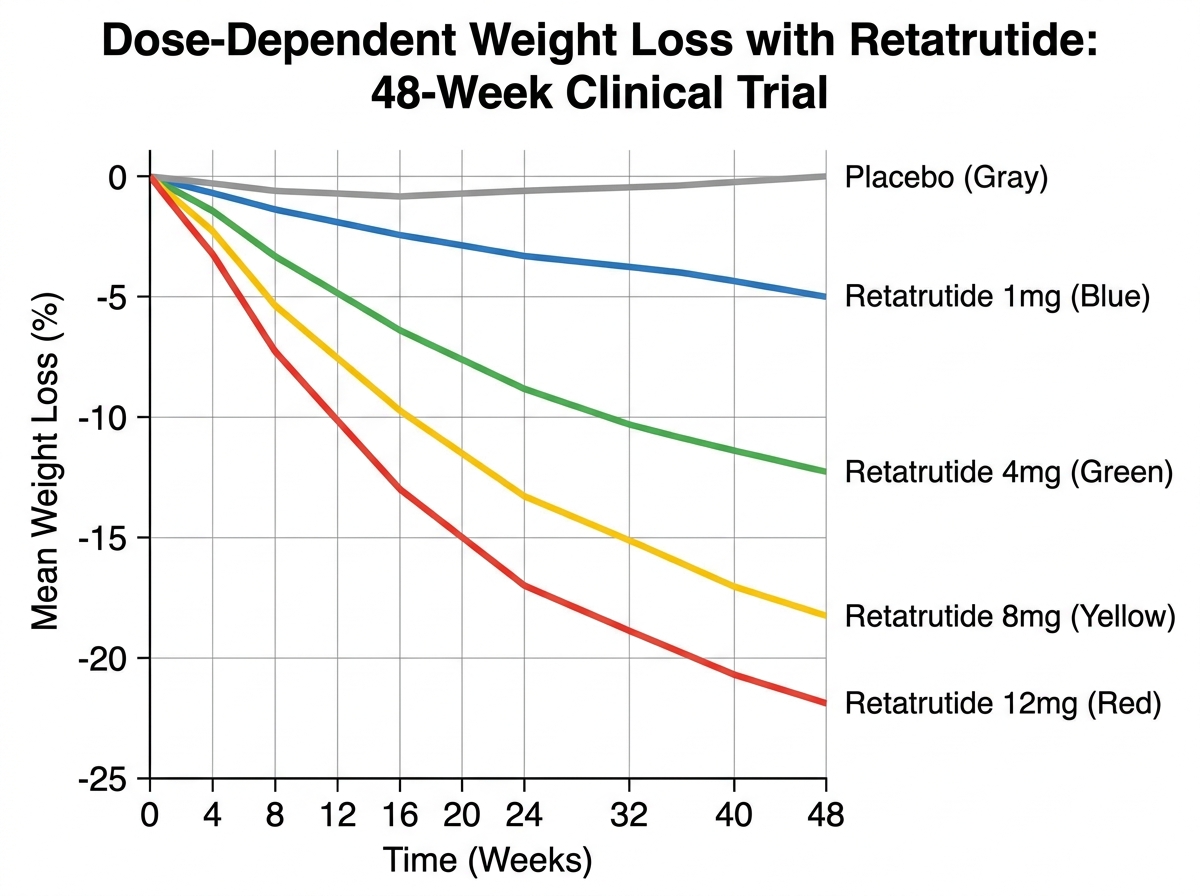
The Jastreboff et al. NEJM phase 2 trial enrolled 338 adults with obesity and tracked them to 48 weeks, with 24-week data representing the clearest "six months" snapshot [1][3]. Least-squares mean weight change at 24 weeks: −7.2% at 1 mg, −12.9% at 4 mg, −17.3% at 8 mg, and −17.5% at 12 mg, versus −1.6% for placebo [1]. For a 240-pound starting weight, the 8–12 mg protocols translate to roughly 40 pounds lost in six months.
Critically, participants had not plateaued at 24 weeks. The 48-week numbers climbed to −22.8% and −24.2% for the 8 mg and 12 mg groups respectively [1][3]. Six months is a strong interim result, not a ceiling.
Body composition substudies confirmed that the majority of lost weight came from adipose tissue — both subcutaneous and visceral — with lean mass reductions proportionally smaller than what caloric restriction alone typically produces [5]. A meta-analysis of available trial data found retatrutide reduced systolic blood pressure by ~6.8 mmHg, LDL-cholesterol by ~13 mg/dL, and triglycerides by ~41 mg/dL compared with baseline [8]. Those are numbers that compete with dedicated antihypertensive and lipid-lowering agents.
Researchers sourcing retatrutide for metabolic studies can find verified research-grade supply through NextGen Peptides, which carries current assay documentation.
Tolerability Over the First Six Months
GI side effects dominate the early experience. Nausea, diarrhea, and vomiting are dose-dependent and front-loaded — most occur during the escalation phase (roughly weeks 1–12) and taper as subjects adapt to maintenance dosing [1][3]. Discontinuation due to adverse events ran 6–16% across active arms in phase 2, with the highest rates at 12 mg [1].
Heart rate increases of 3–6 bpm were observed, peaking around week 24 before declining — a monitoring consideration for any cardiovascular-focused research protocol [1][7]. Gallbladder and thyroid C-cell risks carry the same class warnings as other GLP-1-based compounds; long-term retatrutide-specific data are still accumulating [1].
For researchers designing protocols, the practical takeaway is a mandatory slow titration. Starting at 2 mg and escalating every 4 weeks toward a target of 8–12 mg keeps discontinuation rates manageable. Compare this approach to what's documented in tirzepatide vs. semaglutide protocol comparisons for calibration.
Retatrutide is currently available for research use as a research compound; FDA approval for human therapeutic use remains pending, with phase 3 TRANSCEND trial data reading out and approval anticipated no earlier than 2027. Researchers sourcing it operate in the same space as other investigational peptide compounds. For a broader view of the research peptide landscape, the advanced therapies hub covers current sourcing considerations.
For secondary supplier options, Marek Health also carries research peptide resources relevant to metabolic protocols.
Frequently asked questions
What weight loss can researchers expect to see in a six-month retatrutide protocol?
Phase 2 trial data show mean weight reductions of 13–17% at 24 weeks for doses of 8–12 mg weekly, compared with roughly 1.6% for placebo [1][3]. A subject starting at 220 pounds would project to lose approximately 29–37 pounds over six months at those doses, with weight loss still ongoing rather than plateaued at that timepoint.
How do researchers source retatrutide in 2026?
Research-grade retatrutide is available from verified peptide suppliers including NextGen Peptides and a small set of vendors with third-party purity documentation. Selecting a supplier that provides current certificate-of-analysis data and publishes HPLC purity results is
Nutrition & Metabolic Health Specialist · 8+ years specializing in men's nutrition, Extensive training in clinical nutrition and metabolism
Taylor is a nutrition specialist focusing on men's metabolic health and weight management. With deep expertise in therapeutic nutrition for hormone disorders, Taylor researches and explains how nutrition impacts testosterone, metabolism, and overall male wellness.
Tools and references for this topic
Free calculators and reference charts built from the same sources as this article.
- CalculatorTirzepatide Units Converter — mg to Units on a U-100 Syringe
- CalculatorRetatrutide Dosage Calculator: mg to Units + Reconstitution Chart
- ChartRetatrutide Dosage Chart — mg to Units (No Approved Dose Exists)
- CompoundRetatrutide
- CalculatorGLP-1 Cost Comparison — What Ozempic, Wegovy & Zepbound Cost
Looking for an online provider?
Find a qualified online provider — compare options vetted and reviewed by Alpha Health Finder.