
Which Supplements and Medications Cause Delayed Ejaculation as a Side Effect in Men?
Delayed ejaculation (DE) — taking an unusually long time to reach orgasm, or failing entirely — is one of the most under-reported drug side effects in men. The short list of culprits is dominated by antidepressants, but alpha-blockers, antipsychotics, gabapentinoids, opioids, and even a few over-the-counter supplements belong on the radar too.
Antidepressants: The Biggest Offenders by Far
SSRIs are the clearest pharmacologic cause of DE. By flooding synaptic clefts with serotonin, they activate inhibitory 5-HT₂ and 5-HT₁B receptors that brake ejaculation — sometimes dramatically. In a double-blind trial, paroxetine extended intravaginal ejaculatory latency time (IELT) by 420–480% relative to baseline; sertraline and fluoxetine produced increases in the same order of magnitude [2]. That's the same mechanism exploited when SSRIs are used intentionally to treat premature ejaculation. A large multicenter study put overall sexual dysfunction rates at 57–73% across SSRI agents, with citalopram (72.7%) and paroxetine (70.7%) at the top [1].
SNRIs — venlafaxine, duloxetine — land in the same 58–70% dysfunction range because they share the serotonergic mechanism [1]. Tricyclics like clomipramine add anticholinergic and antiadrenergic effects on top of serotonin reuptake inhibition, making them arguably higher-risk for ejaculatory failure [13]. Bupropion is the notable exception: its norepinephrine–dopamine reuptake profile produces sexual dysfunction in roughly 14% of users versus 73% for SSRIs [1]. If a patient is on an SSRI and reporting DE, switching to bupropion or adding buspirone as an adjunct are both evidence-supported moves [3].
If you're evaluating how a medication may be affecting your hormonal and sexual health more broadly, the hormone optimization treatment hub has context on how neurotransmitter-active drugs interact with testosterone and libido.
Alpha-Blockers, Antipsychotics, Gabapentinoids, and Supplements
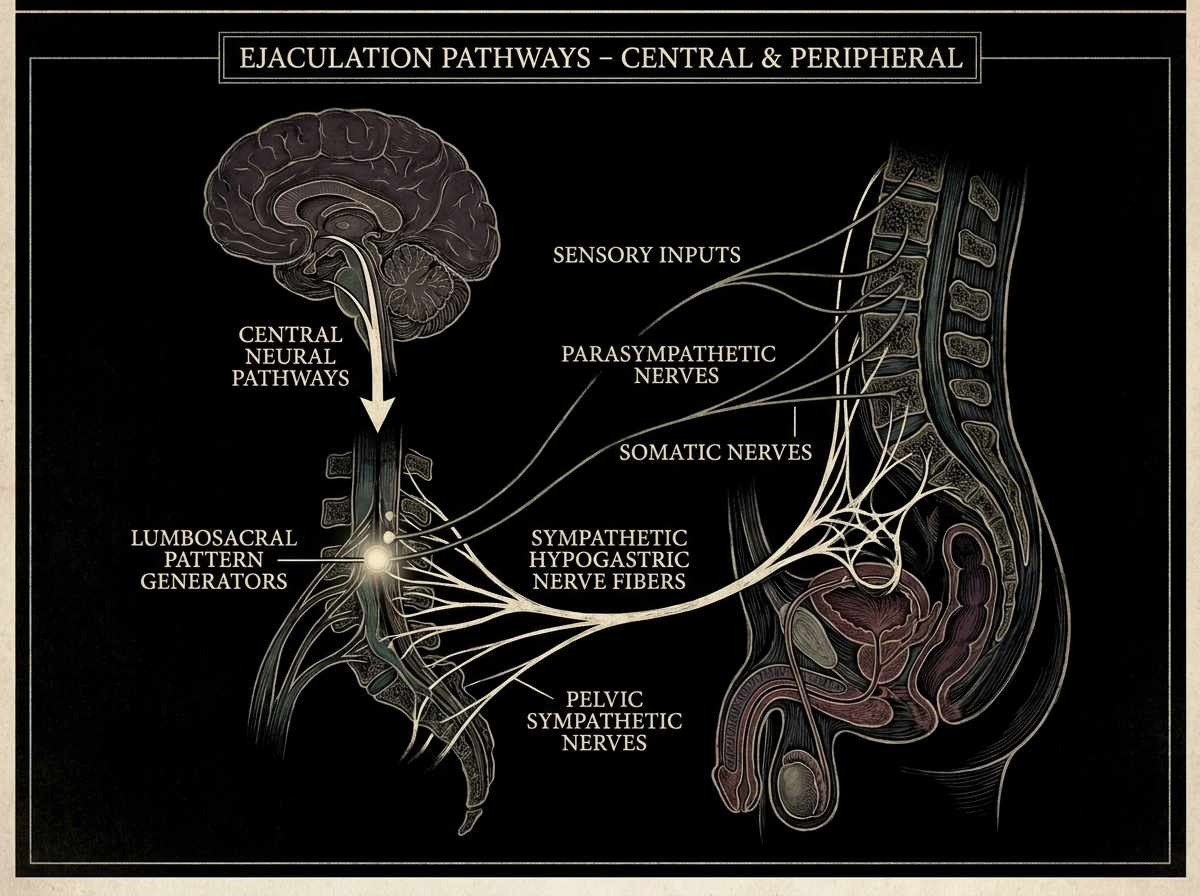
Alpha-1 blockers (tamsulosin, silodosin, alfuzosin) are prescribed for benign prostatic hyperplasia but block the sympathetic signaling that drives smooth-muscle contraction in the vas deferens and bladder neck — the mechanical core of emission [6]. The result is often retrograde ejaculation or anejaculation, not just delay. Silodosin carries the highest rate in this class.
Antipsychotics, especially risperidone and paliperidone, elevate prolactin through dopamine D₂ blockade. One review found orgasm problems in ~41.7% of antipsychotic-treated patients [3]. Prolactin suppresses testosterone and blunts dopaminergic reward pathways — a dual hit on ejaculatory function. Prolactin-sparing agents like aripiprazole and quetiapine carry lower but non-zero risk.
Gabapentin and pregabalin deserve more attention than they typically get. Case reports document anejaculation in men on gabapentin 900–1,500 mg/day, with resolution on dose reduction [7]. A Boston University series found DE or anorgasmia in 3 of 11 men over 50 on gabapentin for neuropathic pain — a rate far above what early clinical trials suggested [7]. Pregabalin has its own published case report of severe DE reversing after discontinuation [5].
On the supplement side, saw palmetto inhibits 5-alpha-reductase and may lower DHT-mediated signaling involved in ejaculatory reflex arcs [8]. Reports are anecdotal but consistent enough to take seriously. If you're stacking supplements for sexual performance, the evidence-based breakdown at supplements that actually improve sexual function and orgasm intensity for men is a useful counterpoint — it covers what the research supports adding versus cutting.
For men whose DE may also involve low testosterone or inadequate treatment optimization, DudeMeds offers telehealth evaluation that accounts for medication interactions alongside hormonal status.
For a broader look at which supplements support versus impair sexual function, the best evidence-based supplements for male libido covers the research in more depth.
Related reading
Frequently asked questions
Which antidepressant is least likely to cause delayed ejaculation?
Bupropion has the lowest rate of ejaculatory and orgasmic side effects among commonly prescribed antidepressants — roughly 14% versus 57–73% for SSRIs [1]. Mirtazapine and nefazodone also carry lower risk than SSRIs or SNRIs. If an SSRI is clinically necessary, fluvoxamine showed the smallest IELT increase in head-to-head trials, though it still outperformed placebo [2].
Can stopping the medication reverse delayed ejaculation?
In most cases, yes — DE typically resolves within days to weeks after discontinuation or meaningful dose reduction [3]. The exception is a condition called post-SSRI sexual dysfunction (PSSD), in which symptoms persist long after the drug is cleared; its true incidence is still debated, but it is real enough to factor into the informed-consent conversation before starting an SSRI.
Do alpha-blockers cause the same mechanism of delayed ejaculation as antidepressants?
No — the mechanisms are distinct. SSRIs delay ejaculation by amplifying inhibitory serotonergic tone centrally
Nutrition & Metabolic Health Specialist · 8+ years specializing in men's nutrition, Extensive training in clinical nutrition and metabolism
Taylor is a nutrition specialist focusing on men's metabolic health and weight management. With deep expertise in therapeutic nutrition for hormone disorders, Taylor researches and explains how nutrition impacts testosterone, metabolism, and overall male wellness.