
Why Men on Anabolics Should Prioritize Cancer Screenings in 2026
Men who use anabolic-androgenic steroids carry a measurable, documented cancer risk that standard screening guidelines were never designed to address. The International Agency for Research on Cancer classifies androgenic anabolic steroids as Group 2A probable human carcinogens, and the clinical literature records hepatic adenomas, hepatocellular carcinomas, and testicular tumors arising in otherwise healthy men — some after only two to three years of exposure [1][4][8].
The screening gap is real. Guidelines for prostate, colorectal, and liver cancer were written around average-risk populations. A 32-year-old competitive bodybuilder running multi-compound cycles for six years does not belong in that population. What follows is a practical framework for closing that gap.
The Biological Case: How Anabolics Create Cancer Risk
Anabolic steroids drive carcinogenesis through at least two distinct mechanisms. The first is direct androgen receptor (AR) activation: supraphysiologic androgen levels push AR-mediated transcription of genes governing cell proliferation and survival well beyond their physiological range, effectively lowering the threshold for neoplastic transformation in androgen-sensitive tissues [10][8]. The second is metabolic conversion: aromatase converts excess testosterone and synthetic androgens to estradiol, which adds estrogen-receptor-mediated proliferative signaling on top of AR activation — relevant in breast tissue but also documented in hepatocytes [4][8].
17α-alkylated compounds — oxymetholone, stanozolol, oxandrolone — carry the highest hepatotoxic burden because the alkyl group that makes them orally bioavailable also impairs mitochondrial function, induces cholestasis, and triggers cycles of hepatocyte injury and regeneration that favor clonal expansion of mutated cells [1][4]. Injectable esters of testosterone are not clean: case reports document hepatocellular carcinoma in non-cirrhotic livers after testosterone enanthate and cypionate use, though the association is weaker than with 17α-alkylated agents [4][5].
In the testis, nandrolone and stanozolol activate the PI3K/AKT pathway via IGF-1 signaling, promoting Leydig cell proliferation. A population-based case-control study found that use of muscle-building supplements — many of which contain undisclosed androgenic compounds — was associated with a 65% increased risk of testicular germ cell cancer overall, rising to 121% among men who started use before age 25 [6]. That is not a marginal signal.
The Liver: Your Highest-Priority Screening Target
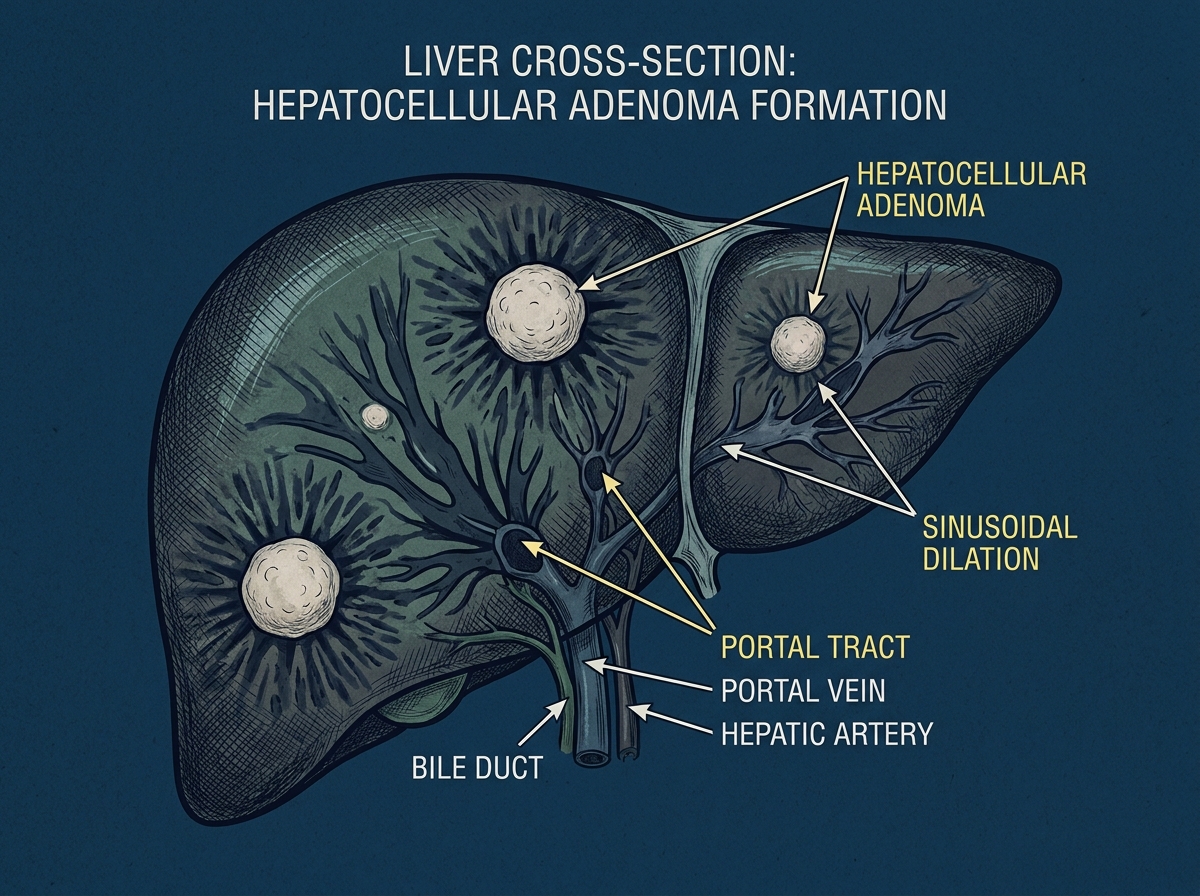
The liver is where the evidence is strongest and the stakes are highest. The LiverTox database identifies four hepatic injury patterns tied to AAS: transient enzyme elevation, bland cholestasis, peliosis hepatis (blood-filled hepatic cavities), and frank tumors — adenomas and carcinomas [1]. Hepatocellular adenoma (HCA) in men is particularly dangerous because male sex combined with androgen exposure is an independent predictor of malignant transformation to HCC, with transformation rates estimated between 4.2% and 4.5% in resected specimens [4][8].
Major hepatology guidelines now recommend surgical resection of HCA in men regardless of lesion size or subtype, a blanket recommendation that reflects the androgen-amplified transformation risk [8]. Critically, regression of both HCA and early HCC after AAS discontinuation has been documented in multiple case series — including a 1975 Lancet report describing two of three HCC patients whose tumors regressed after stopping steroids [5]. That finding has not changed the calculus for resection, but it does underscore why early detection matters: you have a treatment lever that does not exist in cirrhosis-related HCC.
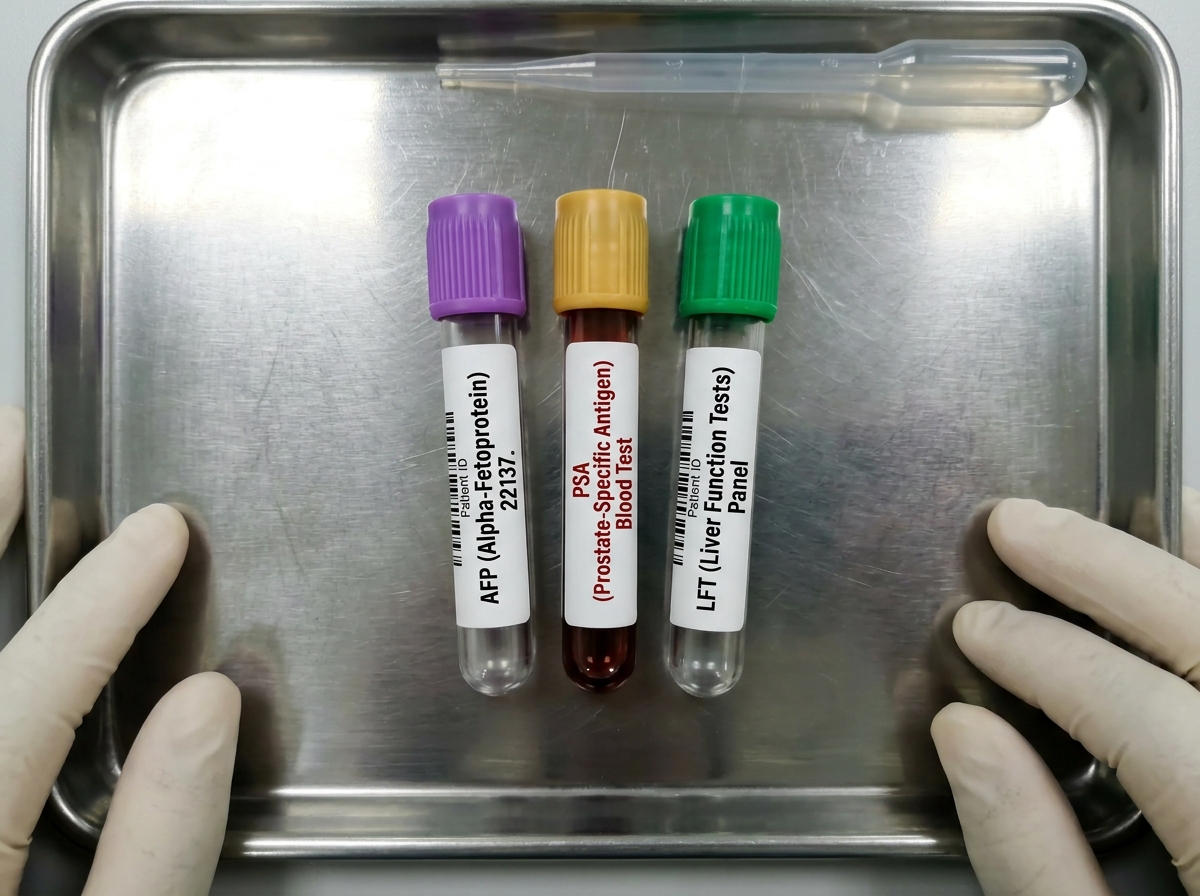
Practical protocol: Abdominal ultrasound every 6 months is the current standard for HCC surveillance in high-risk patients with chronic liver disease. For men on long-term AAS without diagnosed cirrhosis, annual ultrasound plus alpha-fetoprotein (AFP) testing is a defensible minimum; semi-annual imaging is justified after five or more years of use or with any prior LFT abnormalities. If ultrasound flags a lesion ≥1 cm, contrast-enhanced MRI or CT is the next step — not watchful waiting. Men seeking a clinician who understands how to order and interpret this surveillance in the context of hormone use can find vetted options at hormone optimization specialists or compare telehealth providers at DudeMeds, which maintains panels that include hepatic monitoring in its TRT protocols.
Prostate and Testicular Screening: What the Evidence Actually Supports
The prostate question is more complicated than the liver question. Standard PSA screening guidelines apply to men 55–69 at average risk. AAS users present a different problem: exogenous androgens suppress endogenous LH and FSH, causing testicular atrophy and hormonal dysregulation, but they also sustain or exceed physiologic DHT levels at the prostate — the tissue where 5α-reductase converts testosterone to its most potent AR agonist [4][8]. The Danish cohort study that followed 1,189 male androgen users for a mean of 11 years found no prostate cancers diagnosed in that group versus 612 cancers across all types in controls — but the cohort was young (mean age in the 20s–30s) and the follow-up was too short to capture prostate cancer latency [2]. That null finding is not reassuring for men now in their 40s who started cycling in their 20s.
A reasonable position: men on AAS who are 40 or older should have a baseline PSA and digital rectal exam, then annual PSA monitoring. Men under 40 with more than five years of cumulative use should establish a baseline PSA now, so velocity can be tracked over time. PSA interpretation requires adjustment — a rapidly rising PSA even within "normal" range is more informative than any single value.
For testicular cancer, monthly self-examination is the only widely available screening tool, and it works: most testicular germ cell tumors are detected by the patient himself. Any firm, painless nodule warrants scrotal ultrasound within days, not weeks. Given the elevated risk signal from the muscle-building supplement data [6], this is not a theoretical concern. Understanding the full cardiovascular and hormonal picture that goes alongside AAS use is equally important — our guide to cardiovascular risk reduction in men over 40 covers overlapping risk factors in detail.
Colorectal and Lung Screening: Standard Guidelines Apply, With Caveats
Colorectal cancer screening guidelines recommend colonoscopy or stool-based testing starting at age 45 for average-risk individuals. There is no strong direct evidence that AAS use independently elevates colorectal cancer risk, but men who use anabolics often stack other compounds — notably insulin, GH, and IGF-1 — that do carry colorectal proliferative risk through IGF-1 receptor signaling. If a man is running GH or IGF-1 peptides alongside anabolics, the colorectal screening start age should arguably be pulled forward to 40, not 45.
Lung cancer screening with low-dose CT is recommended for current or former smokers aged 50–80 with a 20-pack-year history. AAS use does not independently modify this recommendation. However, men who combine anabolics with stimulants, recreational drugs, or tobacco — a not-uncommon pattern in competitive bodybuilding — should not delay their lung screening eligibility assessment. Peter MD offers comprehensive longevity panels that include screening coordination across multiple cancer types, which is useful for men who want a single clinical contact managing their surveillance schedule.
For men interested in understanding how broader hormonal optimization intersects with long-term health maintenance, the online providers hub for HRT lists clinics that integrate cancer screening referrals into their protocols rather than treating hormone management and preventive oncology as separate silos.
Building Your Practical Screening Schedule
The absence of AAS-specific screening guidelines from major oncology bodies is a gap, not a green light. Here is a consolidated framework based on the existing evidence:
Liver (highest priority):
- Baseline LFTs, AFP, and abdominal ultrasound before or at the start of any long-term AAS protocol
- Annual ultrasound + AFP for all current users; semi-annual after 5+ years of use
- Immediate contrast MRI/CT for any hepatic lesion ≥1 cm
Prostate:
- Baseline PSA at age 40 (or at start of use if older)
- Annual PSA with velocity tracking; DRE at clinical discretion
- Lower threshold for urology referral than in average-risk men
Testicular:
- Monthly self-exam; scrotal ultrasound for any palpable abnormality within 1 week
Colorectal:
- Colonoscopy at 40–45 depending on co-exposure to GH/IGF-1 compounds
Lung:
- Standard USPSTF criteria apply; do not delay if smoking history qualifies
Coordinating this across specialties is genuinely difficult. Men who want a primary care or men's health provider to manage the full picture should look at what integrated hormone clinics offer — the hormone optimization treatment hub is a reasonable starting point for finding providers who speak both languages. For a broader picture of how lifestyle compounds interact with cancer and aging biology, our editorial on what actually improves energy and productivity in men covers overlapping endocrine levers worth understanding.
Frequently asked questions
Do anabolic steroids cause liver cancer?
Anabolic steroids — particularly 17α-alkylated oral compounds — are documented causes of hepatocellular adenoma and hepatocellular carcinoma in non-cirrhotic livers, with tumors reported after as little as two to three years of use [1][4][5]. The IARC classifies the class as Group 2A probable human carcinogens. Regression after stopping the drug has been observed in early-stage lesions, which makes early detection through routine ultrasound surveillance genuinely consequential.
When should men on AAS start PSA screening?
Men on anabolic steroids should establish a baseline PSA at age 40, or immediately if they are older than 40 and have not yet been tested. Standard guidelines set the starting age at 55 for average-risk men, but sustained supraphysiologic DHT exposure at the prostate justifies earlier surveillance. PSA velocity — the rate of change over time — matters more than any single value in this population.
What liver tests should AAS users get and how often?
At minimum, a full liver function panel (ALT, AST, GGT, bilirubin, alkaline phosphatase) plus alpha-fetoprotein (AFP) and abdominal ultrasound annually. Men with more than five years of cumulative use, any prior LFT abnormalities, or co-exposure to alcohol or hepatitis C should move to semi-annual imaging. A single elevated LFT is not an emergency, but a persistent upward trend warrants imaging regardless of absolute values.
Is testicular cancer risk real for men who use steroids?
Yes. Research-grade evidence links muscle-building supplement use — a significant fraction of which involves undisclosed androgenic compounds — to a 65% increased odds of testicular germ cell cancer, with the risk doubling for men who started use before age 25 [6]. Monthly self-examination remains the most accessible screening tool; scrotal ultrasound should follow any palpable nodule within days, not weeks.
Can a telehealth TRT provider manage my cancer screening?
A telehealth men's health provider can order LFTs, PSA, AFP, and refer you for imaging, but they cannot replace a gastroenterologist for colonoscopy or a radiologist for hepatic lesion workup. The practical value of a good telehealth provider — such as those listed at DudeMeds — is coordinating baseline labs and flagging abnormalities early enough to route you to the right specialist before a lesion becomes a crisis.
Does stopping anabolic steroids reverse the cancer risk?
Stopping AAS is the most important single intervention when a liver lesion is found, and regression of hepatic adenoma and early HCC after discontinuation is documented [1][5][8]. However, regression is not guaranteed, and malignant transformation can occur even after cessation. Stopping reduces ongoing carcinogenic stimulus but does not undo prior genomic or epigenetic changes. Early detection while still on-cycle is better than late detection after stopping.
Nutrition & Metabolic Health Specialist · 8+ years specializing in men's nutrition, Extensive training in clinical nutrition and metabolism
Taylor is a nutrition specialist focusing on men's metabolic health and weight management. With deep expertise in therapeutic nutrition for hormone disorders, Taylor researches and explains how nutrition impacts testosterone, metabolism, and overall male wellness.