Highest-Return Biohacks for Men in 2026: What Actually Moves the Needle
The interventions with the best effort-to-outcome ratio for men aren't exotic—they're a short list of pharmacologic, nutritional, and behavioral tools with solid trial data behind them. Here's where the evidence actually points.
Hair and Appearance: Two Drugs That Outperform Everything Else
Topical minoxidil and oral finasteride are the clearest examples of high-ROI biohacking in men's health. A 30-month open-label trial found that 70% of men who stayed on topical minoxidil had at least 50% more hairs than at baseline—with no systemic side effects reported [1]. Finasteride 1 mg daily produced a 93% decrease relative to placebo in the likelihood of developing further visible hair loss over five years (95% CI 89–97%, p < 0.001) [4]. One pill, once a day, and the vast majority of adherent men essentially stop their hair loss clock.
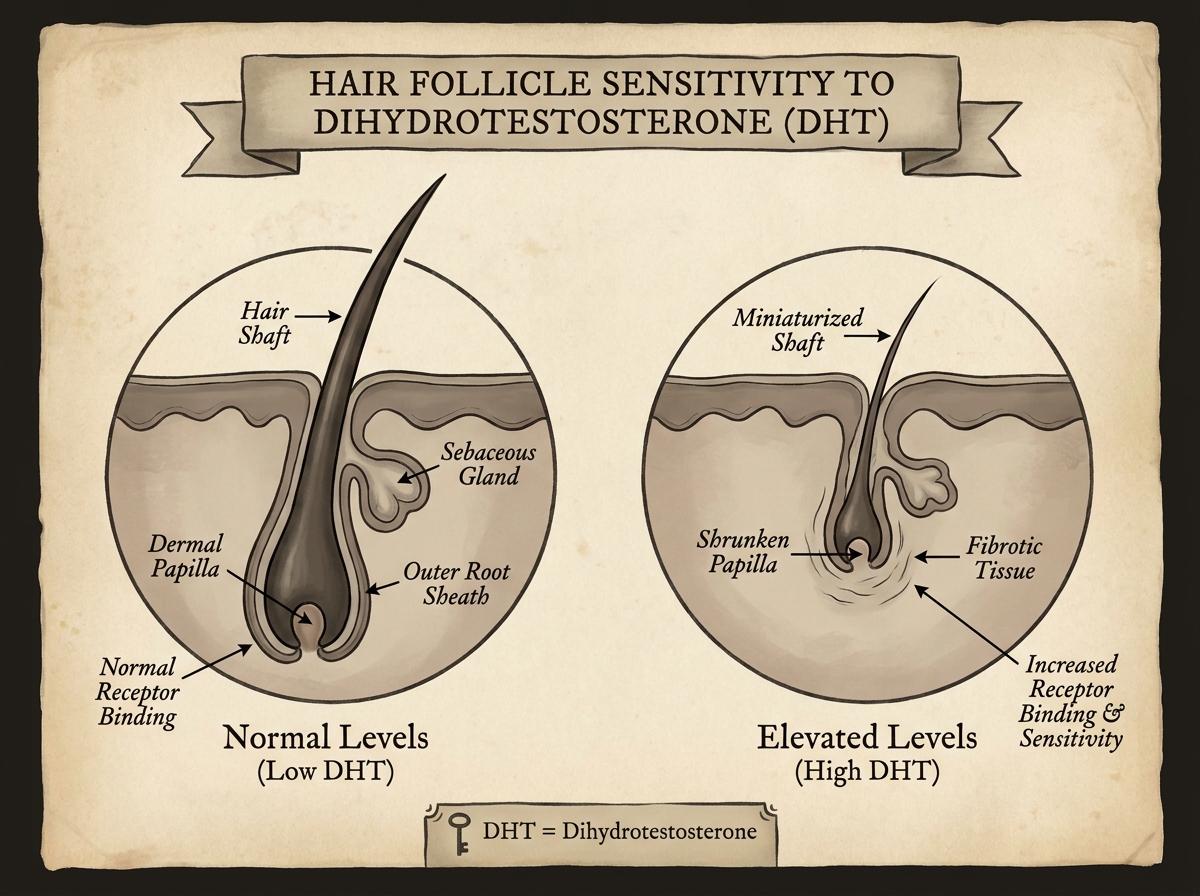
The combination is synergistic: minoxidil extends the anagen growth phase while finasteride cuts the DHT driving follicular miniaturization. Effort cost is roughly four minutes per day. Generic finasteride runs $5–$30/month; 5% topical minoxidil runs $10–$25/month [5]. The main real tradeoff with finasteride is a small but real risk of reduced libido or erectile symptoms—worth discussing with a clinician before starting. If you want a structured conversation about where hair pharmacotherapy fits in a broader hormone optimization plan, that context matters.
Sexual Function: PDE5 Inhibitors Deliver the Fastest Return
Sildenafil and tadalafil have among the best therapeutic effect sizes in all of men's medicine. A pivotal trial in men with erectile dysfunction showed sildenafil produced significant improvements in erectile function scores versus placebo, with cardiovascular safety confirmed in appropriately selected men [3]. Tadalafil's 36-hour window makes it even lower-effort in practice—one 5 mg daily dose keeps the mechanism primed.
These drugs work through a well-understood mechanism (PDE5 inhibition → increased cGMP → smooth muscle relaxation) with a known safety profile. They don't require lifestyle change, they act within 30–60 minutes, and generic versions have pushed costs to $1–$3 per dose. For men who want a vetted provider to evaluate candidacy and handle prescribing, DudeMeds offers online ED consultations with transparent pricing and same-week access.
Creatine + Resistance Training: The Compounding Stack
Creatine monohydrate combined with resistance training produces larger strength gains than training alone, particularly in younger men, without demonstrable long-term kidney or liver harm in healthy individuals [7]. The mechanism is straightforward: creatine increases phosphocreatine availability for short-burst ATP resynthesis, letting you do more work per session. That additional volume compounds over months.
The effort ask is low: 3–5 g/day of creatine monohydrate (no loading phase required), two to three resistance sessions per week. Cost is under $20/month for bulk powder. High cardiorespiratory fitness and resistance training are also associated with graded reductions in all-cause mortality that rival—or exceed—traditional cardiovascular risk factors in predictive power [see also: what leading longevity researchers actually recommend for men in 2026].
What Doesn't Move the Needle Much
Vitamin D supplementation raises testosterone only in men who are both vitamin D-deficient and have low baseline testosterone to begin with—a narrow subgroup [2]. In healthy men with normal baseline levels, a randomized trial found a median testosterone change of just 0.5 nmol/L, statistically null (p = 0.497) [6]. The VITAL trial confirmed vitamin D at 2,000 IU/day doesn't reduce cardiovascular events or cancer incidence in generally healthy adults [19]. Correct deficiency if it exists, but don't expect it to be a performance lever.
Testosterone replacement therapy is approved only for diagnosed hypogonadism—not age-related decline [8]. The FDA has added blood-pressure warnings to all TRT labeling regardless of delivery route [8]. For men without clearly documented low testosterone, TRT carries real cardiovascular and hematologic risks that aren't offset by modest symptomatic gains. Sleep quality, by contrast, is a genuine zero-cost lever—see our piece on why 0.5 mg of melatonin outperforms 10 mg for men's sleep in 2026. If you want a second opinion on whether TRT is actually indicated, Peter MD provides diagnostic-first hormone evaluations online.
Frequently asked questions
What is the single highest-return biohack for men with minimal effort?
PDE5 inhibitors (sildenafil or tadalafil) deliver the fastest and most reliable return for sexual function, while finasteride 1 mg daily offers the highest long-term ROI for hair preservation—both requiring minimal daily effort and costing under $30/month in generic form [3][4]. Creatine monohydrate plus basic resistance training is the best compound stack for strength and longevity with no prescription required [7].
Does vitamin D actually boost testosterone in men?
Vitamin D raises testosterone only in men who are deficient and already have low baseline levels—a specific subgroup, not the average healthy male [2][6]. A randomized trial in healthy men with normal baseline testosterone found a statistically null treatment effect (median change: 0.5 nmol/L, p = 0.497) [6]. Correcting deficiency
Nutrition & Metabolic Health Specialist · 8+ years specializing in men's nutrition, Extensive training in clinical nutrition and metabolism
Taylor is a nutrition specialist focusing on men's metabolic health and weight management. With deep expertise in therapeutic nutrition for hormone disorders, Taylor researches and explains how nutrition impacts testosterone, metabolism, and overall male wellness.