How TRT Affects Your Marriage and Relationship: What Men and Their Partners Actually Report
For men with confirmed hypogonadism, testosterone replacement therapy often improves the bedroom and, in many cases, the broader relationship — but the effect is neither automatic nor universal, and the research is more nuanced than the marketing suggests.
Starting from
$99/mo
Free consultation

3.9 AHF · 4.2 Trustpilot
Lowest-priced enclomiphene TRT-alternative at scale — fits a narrow case, not full testosterone replacement.
Get Started FreeWhat the Clinical Evidence Actually Shows
Studies on men with documented low testosterone consistently show improvements in sexual desire, erectile quality, and intercourse frequency after TRT. A couples-focused study published in the Journal of Sexual Medicine found that when hypogonadal men corrected their testosterone deficiency, their female partners reported less pain during sex, greater satisfaction, and improved sexual function overall — even though the women's own desire scores didn't change significantly [6]. The mechanism is straightforward: when a man's libido and erectile function return, the couple's sexual rhythm normalizes, which benefits both partners.
The Endocrine Society Clinical Practice Guidelines on male hypogonadism are direct on this point: TRT is indicated for men with both symptomatic deficiency and consistently low serum levels — not for eugonadal men seeking a relational edge. The NIH-funded Testosterone Trials (TTrials), a seven-arm study that informed much of current prescribing thinking, found meaningful sexual benefits in men with unequivocally low testosterone but more modest gains in men near the low-normal boundary. That distinction matters: if your levels are borderline, TRT may not move the needle on intimacy the way you're hoping.
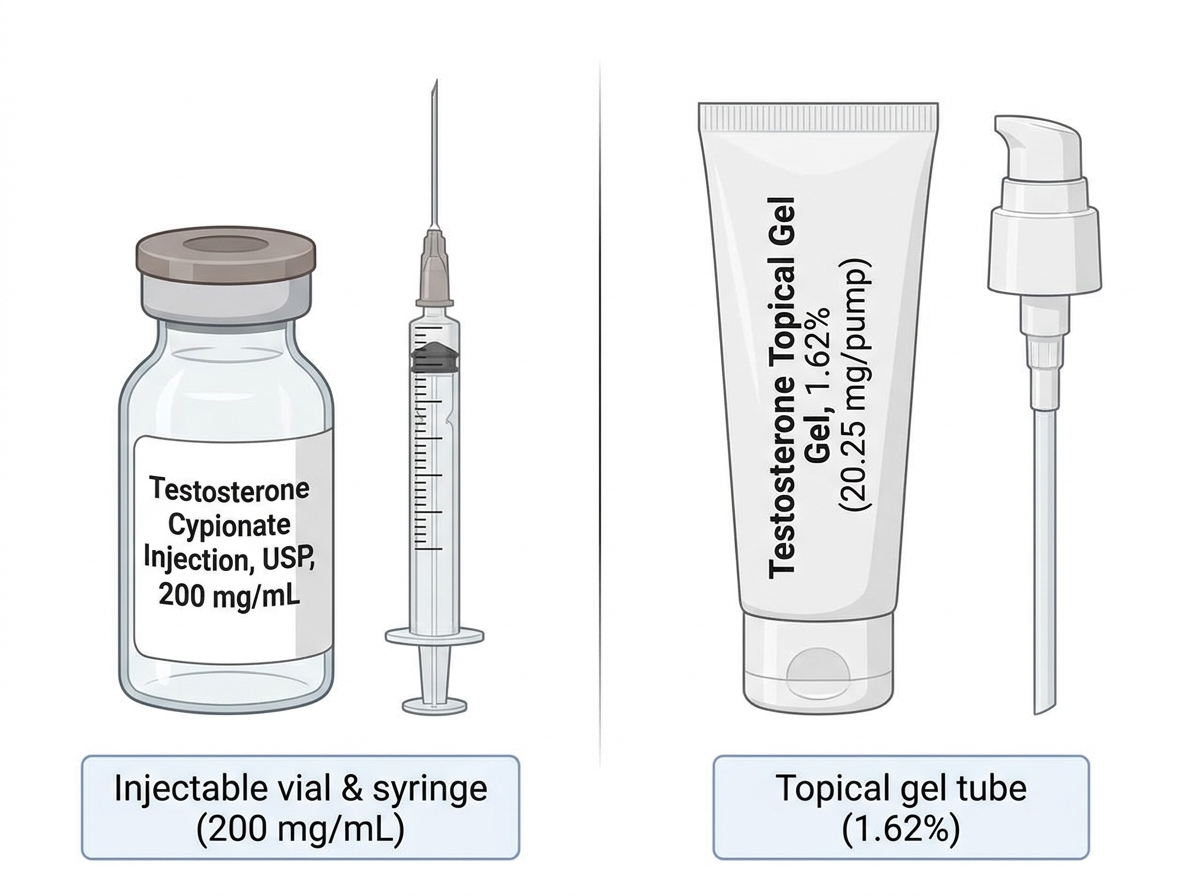
The delivery method shapes the day-to-day relational experience too. Injectable testosterone cypionate (including branded formats like Xyosted, a weekly subcutaneous auto-injector) can produce peaks and troughs that partners sometimes notice as mood swings or energy crashes between doses. Topical options like AndroGel offer more stable daily levels but carry a documented secondary-transfer risk — the FDA's boxed warning on AndroGel specifically flags pediatric virilization from skin contact, requiring household protocols that couples need to negotiate together.
For men evaluating their options, the hormone optimization treatment hub provides a structured overview of formulations and clinical criteria.
What Men and Their Partners Report Beyond the Bedroom
The relational changes men describe on TRT extend well past sexual frequency. A UK survey of 905 men on testosterone therapy found that 79% cited improving personal relationships as a primary motivation, and after starting treatment, 69% reported gains in self-esteem and 71% in mental well-being [18]. Those shifts — more initiative, less irritability, reduced fatigue — tend to make men more emotionally available, which partners register even when they can't name the cause.
That said, the social science data adds a meaningful counterweight. Research published in Social Forces found that higher endogenous testosterone correlates with lower likelihood of marriage, higher divorce rates, and more conflict in existing relationships. The Endocrine Society guidelines explicitly caution against dosing TRT to supraphysiologic levels; restoring a man to mid-normal range (roughly 400–700 ng/dL) is the clinical target for good reason. Bhasin et al. 2018 in the NEJM, reporting on the Testosterone Trials, reinforced that physiologic restoration — not optimization above normal — is where benefit-to-risk ratios are most favorable.
Anecdotal evidence from men on TRT tracks with the survey data. User reports on r/Testosterone describe increased emotional connection and empathy alongside higher libido, but several accounts note that mismatched desire became a new friction point when one partner wasn't prepared for the change. That's a communication issue, not a hormone issue — but it's real, and couples benefit from discussing expectations before starting therapy. If you're evaluating clinics that take a thorough, monitoring-focused approach, Marek Health is among the providers that pair hormone optimization with ongoing lab review.
One consideration that rarely gets discussed upfront: TRT suppresses the HPG axis, reducing LH and FSH and impairing spermatogenesis in many men [10]. For couples with future fertility plans, this is a genuine relational decision, not just a medical one. Alternatives like clomiphene (Clomid) or enclomiphene (Androxal) stimulate endogenous testosterone while preserving sperm production — a route worth exploring before committing to exogenous androgens if children are on the table. Our breakdown of estradiol management on TRT covers the hormonal interplay that also affects mood and libido during treatment.
For a broader look at what TRT actually costs and which providers don't overcharge for monitoring, see TRT in 2026: Why Monthly Injection Clinics Overcharge. Comparing clinics and telehealth options by protocol rigor is worth doing before you sign up — the online TRT provider directory is a useful starting point.
Frequently asked questions
Does TRT improve libido and sexual frequency for couples?
TRT reliably improves sexual desire and erectile function in men with confirmed hypogonadism, and partner-reported outcomes follow — women in couples studies report less pain and greater satisfaction after their partner's testosterone deficiency is corrected [6]. The effect is weaker in men with low-normal testosterone rather than frank deficiency; in one randomized trial of elderly men near the low-normal threshold, six months of testosterone supplementation produced no significant improvement in sexual fantasies or intercourse frequency compared to placebo [3].
Can TRT cause relationship problems, not just solve them?
Yes, and the mechanism cuts both ways. Supraphysiologic testosterone levels — from overdosing or poor monitoring — are associated in population studies with higher rates of marital conflict, impulsivity, and infidelity. Even within therapeutic ranges, a sudden increase in libido can create mismatched desire between partners if the change isn't anticipated and discussed. Mood fluctuations from injectable peaks and troughs (common with biweekly
If you're considering TRT, our hormone optimization guide walks through what the protocol actually involves.
Nutrition & Metabolic Health Specialist · 8+ years specializing in men's nutrition, Extensive training in clinical nutrition and metabolism
Taylor is a nutrition specialist focusing on men's metabolic health and weight management. With deep expertise in therapeutic nutrition for hormone disorders, Taylor researches and explains how nutrition impacts testosterone, metabolism, and overall male wellness.
Looking for an online provider?
Find a qualified online provider — compare options vetted and reviewed by Alpha Health Finder.