
Lion's Mane in 2026: What the Evidence Actually Shows
Lion's mane (Hericium erinaceus) produces measurable but modest benefits for cognition and mood in specific populations — older adults with mild cognitive impairment, and overweight individuals with mood disturbances. The gap between that finding and the "brain fertilizer" marketing is wide enough to drive a truck through.
What the Research Actually Supports
The strongest human data come from a Japanese RCT where adults aged 50–80 with mild cognitive impairment (MCI) took 3 g/day of fruiting body powder for 16 weeks and scored significantly better on cognitive screening than the placebo group [12]. Notably, scores declined during the four-week washout after stopping — suggesting effect dependence on continued use, not structural brain repair [12]. A separate trial in healthy adults over 50 using 3.2 g/day showed MMSE improvements but no significant lift on harder memory tests [6].
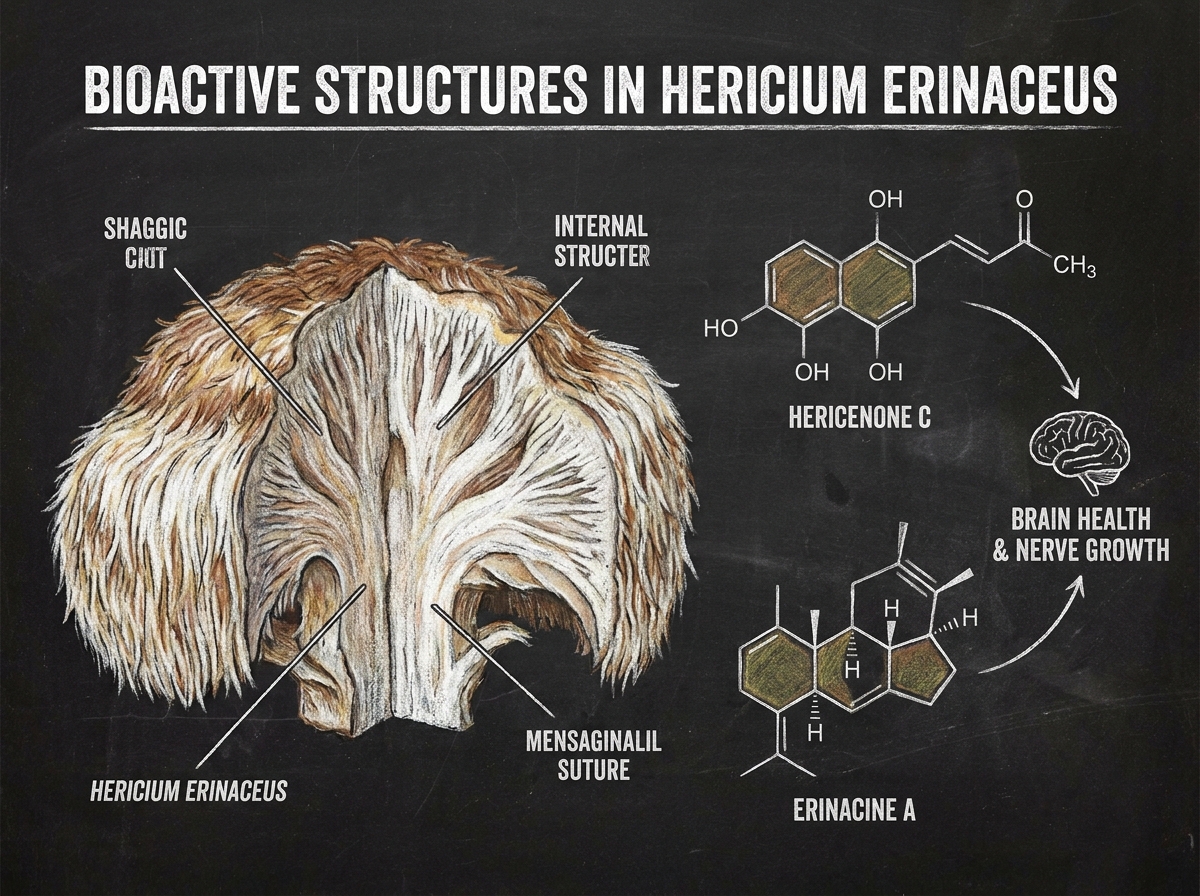
For mood, an eight-week RCT in overweight adults found roughly 35% reductions in depression scores and 40–50% reductions in anxiety scores, alongside improved sleep — with modest persistence after washout, possibly reflecting neurotrophic changes rather than just symptom suppression [6]. Mechanistically, lion's mane appears to stimulate nerve growth factor (NGF) and BDNF synthesis via hericenones and erinacines, its two primary bioactive classes [1][6].
What it does not do: acute cognitive enhancement in healthy, younger men is not reliably demonstrated. A 2023 pilot RCT found faster Stroop task performance 60 minutes after a single 1.8 g dose but no broad cognitive benefit, and 28 days of supplementation produced no robust effect [1]. If you're a 35-year-old looking for a same-day focus boost, the data don't back it.
Men interested in the broader landscape of evidence-based cognitive and hormonal optimization can find a useful framework at /treatments/hormone-optimization.
Safety: Not Trivial, Not Alarming
At 1–3 g/day of whole fruiting body powder, lion's mane is generally well tolerated. GI discomfort and occasional headaches are the most commonly reported adverse events [6][8]. Serious reactions are rare.
The risks worth flagging for men specifically: hericenone B inhibits platelet aggregation in vitro [6], which creates a plausible bleeding risk when stacked with anticoagulants (warfarin, apixaban) or antiplatelet drugs (aspirin, clopidogrel). If you're taking any of those — or heading into surgery — disclose the supplement to your physician. Immune-stimulating properties are also documented preclinically, which is relevant for men managing autoimmune conditions [6].
There are no documented effects on testosterone, erectile function, or sperm parameters in rigorous human trials. Claims circulating on supplement retail sites linking lion's mane to male sexual health are not grounded in published clinical data. For those concerns, low libido in men over 40 is a better starting point for evidence-based reading.
The Current Debate: What's Still Unsettled
Two ongoing trials will sharpen the picture. NCT06870136 is a 14-week decentralized RCT in 150 adults aged 40–75 with subjective memory complaints, measuring attention, working memory, mood, sleep, and stress with a consumer-grade product versus placebo [2]. The HECOG trial (NCT07405632) examines acute and chronic cognitive effects in middle-aged adults at 45-minute, one-week, and two-month intervals [3]. Neither is male-specific — which is a persistent gap in the literature.
The formulation debate also matters practically. Fruiting body extracts contain hericenones; mycelial products are richer in erinacines. Most positive cognitive trials used fruiting body powder at 3 g/day [6][12]. Many retail products are mycelium-on-grain preparations with poorly characterized bioactive content. Standardization is not yet consistent across the market [4][5].
Dosing consensus from the clinical literature clusters at 1,000–3,000 mg/day of whole fruiting body powder, taken in divided doses, for at least 12 weeks before expecting cognitive effects [6][8]. Lower doses of standardized extracts (250–500 mg of an 8:1 extract) may approximate that range, but comparative bioavailability data in humans are limited [4][5].
Men who want to discuss nootropic supplementation alongside a broader hormone and metabolic workup can consult directly through DudeMeds, which provides telehealth access to physicians familiar with integrative men's health protocols.
For context on how lion's mane fits within the broader category of mood and sleep supplements, see the comparison at magnesium glycinate vs apigenin vs prescription sleep aids.
Related reading
Frequently asked questions
Does lion's mane actually improve memory and focus?
Lion's mane improves global cognitive screening scores in older adults with mild cognitive impairment at doses of 3 g/day over 12–16 weeks, but evidence for robust memory or focus enhancement in healthy men is weak [1][6][12]. Acute effects in younger adults are task-specific and inconsistent across studies. Effects appear to require continued use — scores regressed after four weeks off the supplement in the best-known MCI trial.
Is lion's mane safe to take daily?
Daily use at 1–3 g of whole fruiting body powder is generally well tolerated, with GI discomfort and occasional headaches as the most common side effects [6][8]. Men on anticoagulants, antiplatelet drugs, or with autoimmune conditions should consult a physician before use, given documented platelet-
What happens to lion's mane cognitive benefits when you stop taking it?
Lion's mane cognitive benefits appear to depend on continued use rather than producing lasting structural brain changes. In the key Japanese RCT, participants who scored significantly better on cognitive screening after 16 weeks of taking 3 g/day saw their scores decline during the four-week washout period after stopping supplementation. This suggests the effects are maintenance-dependent, which is an important consideration for anyone weighing long-term supplementation costs and commitment.
Nutrition & Metabolic Health Specialist · 8+ years specializing in men's nutrition, Extensive training in clinical nutrition and metabolism
Taylor is a nutrition specialist focusing on men's metabolic health and weight management. With deep expertise in therapeutic nutrition for hormone disorders, Taylor researches and explains how nutrition impacts testosterone, metabolism, and overall male wellness.