
What Actually Happens to Your Metabolism When You Cut Sugar for 30 Days
Eliminating added sugar for 30 days triggers measurable changes in insulin signaling, liver fat, cardiovascular markers, and testosterone — and most of them start within the first week. This isn't a detox myth; it's well-supported physiology.
Starting from
$149
Free consultation

4.3 AHF · 4.8 Trustpilot
Solid GLP-1 weight loss telehealth at competitive monthly pricing with real-clinician care.
Get Started FreeThe First Week: Insulin and Liver Fat React Fast
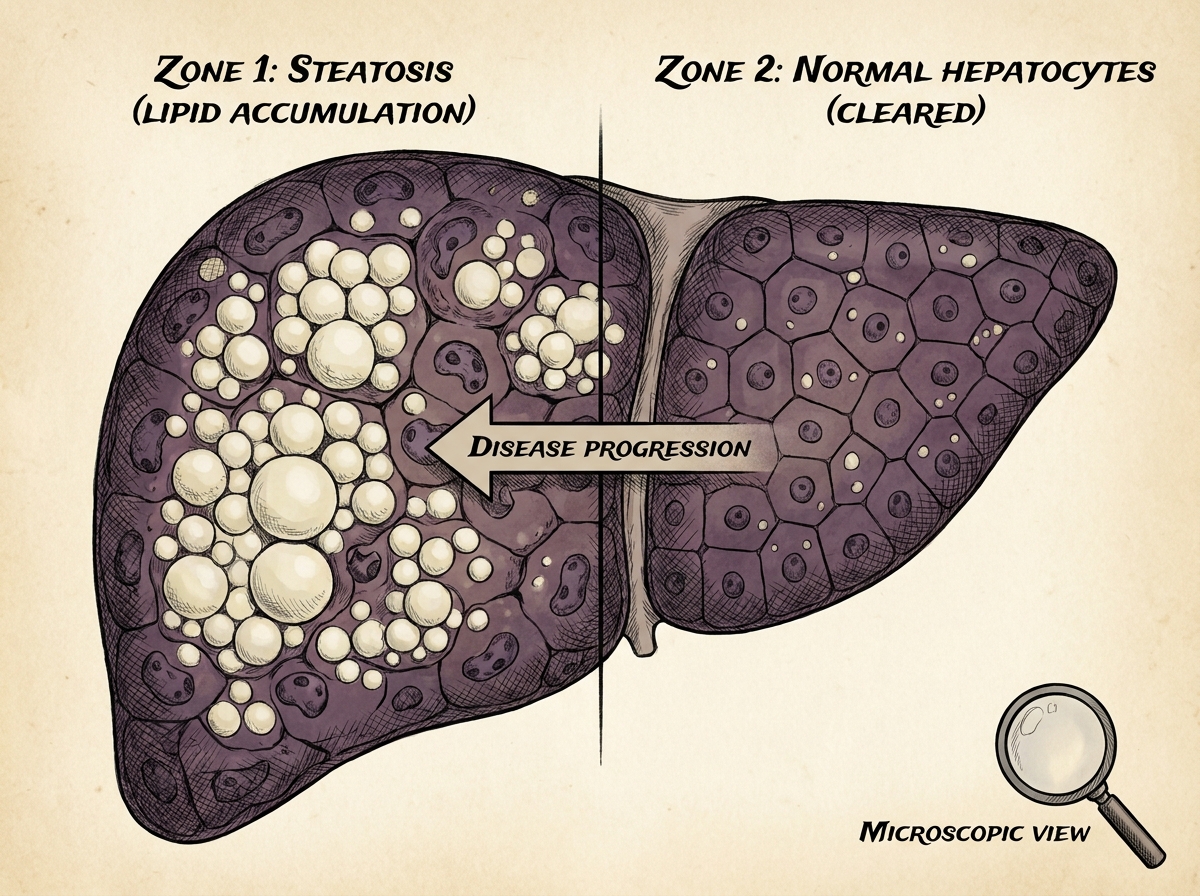
When you stop feeding your liver a steady stream of fructose and glucose from added sugars, hepatic de novo lipogenesis — the process that converts excess carbohydrate into stored fat — drops sharply. In a controlled fructose-restriction trial, intrahepatic lipid content fell from 7.2% to 3.8% in just nine days without any change in total calories [9][10]. That's nearly half the liver fat, gone, before you've finished your second week.
Insulin sensitivity improves in parallel. Lower glycemic variability means your pancreas secretes less insulin per meal, which reduces serine phosphorylation of insulin receptor substrates — one of the primary molecular brakes on glucose uptake [9]. Fasting insulin and HOMA-IR decline, and men who previously experienced mid-afternoon energy crashes typically report those disappearing by day five to seven [2].
The first few days can feel rough, though. Habitual sugar intake engages dopaminergic reward circuits, and removing it abruptly can produce cravings, mild headaches, and irritability as those circuits recalibrate [2]. This is transient — typically resolving by day four to seven — and is not a reason to abandon the protocol.
If you're working with a clinician on metabolic optimization, hormone optimization protocols often pair dietary changes like this with lab monitoring to track the downstream endocrine effects described below.
Weeks Two Through Four: Testosterone, Triglycerides, and Cardiovascular Markers
The testosterone connection is real and underappreciated. A randomized crossover study of 57 men found that a single oral glucose load suppressed luteinizing hormone pulsatility and reduced total testosterone by approximately 20–25% within two hours compared to water [1]. Men eating high-sugar diets are hitting that suppression repeatedly throughout the day. Remove the sugar, and those acute testosterone dips stop happening. Over weeks two through four, as insulin resistance eases and visceral adiposity begins to decline, baseline testosterone trends upward — particularly in men whose low-T was functionally driven by obesity and metabolic dysfunction rather than primary hypogonadal disease [1].
Cardiovascular markers move in the right direction too. Adults consuming 17–21% of calories from added sugar carry a 38% higher risk of cardiovascular mortality compared to those at 8% [4][7]. The mechanism runs through triglycerides: lower hepatic DNL means less VLDL synthesis, lower plasma triglycerides, and a shift away from small dense LDL particles. Men in the top quintiles of total sugar intake show hazard ratios for coronary heart disease of 1.16 compared to the lowest quintile — and that risk is carried almost entirely by added sugars, not by natural sugars from whole fruit [3][5].
For a deeper look at what else moves the needle on men's cardiovascular risk, see our evidence-ranked guide to cardiovascular risk reduction in men over 40.
Men dealing with metabolic syndrome or early NAFLD who want clinical support alongside dietary changes can explore telehealth-based metabolic programs through DudeMeds, which offers monitored GLP-1 and metabolic optimization protocols.
What the Evidence Actually Supports — and Where It's Thin
The data on liver fat, insulin sensitivity, triglycerides, and acute testosterone suppression is solid [1][3][4][5][9]. The data on sustained testosterone increases and semen quality improvements from a 30-day intervention specifically is thinner — most reproductive endocrine changes require longer-term body composition shifts to consolidate. Don't expect a 30-day challenge to fix clinically diagnosed hypogonadism; do expect it to remove a meaningful daily suppressive load on your HPG axis.
Naturally occurring sugars in whole fruit are not the problem. The risk associations in large cohorts apply to added sugars and sugar-sweetened beverages, not to fructose embedded in fiber-rich whole foods [3][5]. A 30-day challenge that eliminates an apple alongside a can of soda is miscalibrated.
For men interested in the broader hormonal picture — including how sleep and energy interact with these metabolic changes — the 2026 data-driven survey on what actually improves energy in men covers complementary ground.
If you want a second clinical opinion on where your metabolic markers sit, PeterMD runs comprehensive cardiometabolic panels through its men's health platform.
Frequently asked questions
Does cutting sugar for 30 days actually raise testosterone?
Stopping added sugar reduces the frequency of acute testosterone suppression events caused by glucose-driven drops in LH pulsatility, with studies showing single glucose loads can lower total testosterone by 20–25% within hours [1]. Over 30 days, as insulin resistance and visceral fat improve, baseline testosterone tends to trend upward in men with metabolically driven low-T. This is a meaningful shift, but it won't correct primary hypogonadism — that requires clinical evaluation.
How quickly does liver fat respond to cutting added sugar?
Controlled fructose-restriction trials show intrahepatic lipid content can drop nearly 50% in as little as nine days when added sugar is significantly reduced, even without cutting total calories [9]. For men with elevated liver enzymes or early NAFLD, this is clinically significant and represents the earliest detectable benefit of the intervention.
What counts as "added sugar" in a 30
Nutrition & Metabolic Health Specialist · 8+ years specializing in men's nutrition, Extensive training in clinical nutrition and metabolism
Taylor is a nutrition specialist focusing on men's metabolic health and weight management. With deep expertise in therapeutic nutrition for hormone disorders, Taylor researches and explains how nutrition impacts testosterone, metabolism, and overall male wellness.
Tools and references for this topic
Free calculators and reference charts built from the same sources as this article.
- CalculatorTestosterone Levels by Age — Reference Range Chart (Travison 2017)
- CostsTestosterone Lab Panel Cost: The Published Rate, Test by Test
- GuideHow to Read a Testosterone Panel, Line by Line
- CalculatorTestosterone Dose Calculator — Weekly mg to mL and Syringe Units
- CalculatorVial Duration Calculator: How Long a Vial or Pen Lasts
Looking for an online provider?
Find a qualified online provider — compare options vetted and reviewed by Alpha Health Finder.