
Does Amphetamine Normalize Brain Function in ADHD or Just Mask Symptoms?
Amphetamine-based medications do more than suppress ADHD symptoms — neuroimaging evidence shows they acutely restore dopamine and norepinephrine signaling in fronto-striatal circuits toward neurotypical patterns, and chronic use is associated with partial normalization of structural abnormalities in reward regions. That said, they are not a cure: the underlying developmental vulnerability persists, and symptoms reliably return when the drug clears.
What's Actually Happening in the ADHD Brain
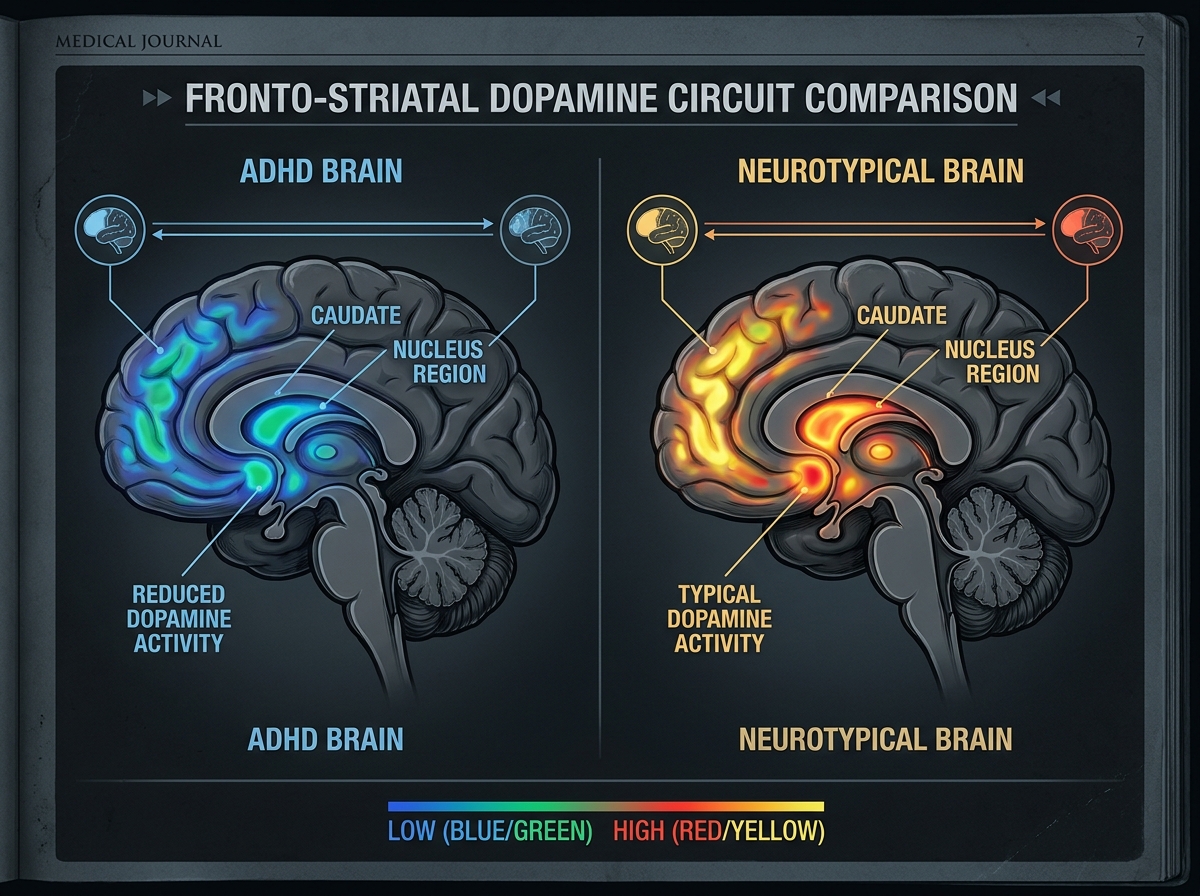
ADHD is a disorder of dysregulated dopamine and norepinephrine signaling in the prefrontal cortex, caudate nucleus, and nucleus accumbens — not a vague "chemical imbalance" but a measurable deficit in catecholamine transmission across fronto-striatal reward circuits [2]. Structural MRI consistently shows reduced caudate and NAc volumes in ADHD. PET imaging finds lower D2/D3 receptor availability and blunted dopamine release during reward anticipation [2]. Functional MRI adds another layer: the default mode network — the brain's internal-chatter system — fails to deactivate properly during attention-demanding tasks, which is why sustained focus feels like fighting gravity.
For men specifically, these deficits translate into impaired executive function, poor delay of gratification, and reduced occupational consistency. Untreated adult ADHD correlates with higher rates of unemployment, relationship instability, and substance use — all downstream of the same broken reward circuitry. Understanding how this works also informs the dopamine system dynamics that affect men's cognitive performance well beyond a clinical diagnosis.
The Normalization Evidence Is Real — and Has Limits
Amphetamine works by entering presynaptic terminals via the dopamine transporter (DAT), disrupting vesicular storage through VMAT2 inhibition, and driving reverse transport of dopamine and norepinephrine into the synapse [1]. At therapeutic doses, this preferentially elevates catecholamines in the prefrontal cortex rather than flooding the striatum — which is why clinical doses improve attention rather than producing euphoria [2].
Neuroimaging data support genuine normalization during active dosing. Stimulant-treated children show caudate volumes closer to neurotypical controls than untreated peers [2]. fMRI studies demonstrate that medial prefrontal cortex activation during inhibitory-control tasks normalizes on medication. PET studies link dopamine increases in the striatum directly to reductions in inattention scores. A randomized double-blind trial of mixed amphetamine salts extended-release (MAS XR) in adults found a mean effect size of 0.8 on ADHD Rating Scale scores within the first treatment week, with significant improvements sustained at both 4- and 12-hours post-dose [8].
The ceiling on this argument is equally important. The six-year adult follow-up data show that roughly one-third of patients reached remission — but current medication status was not significantly associated with achieving it [8]. Remission correlated more with psychological adaptation and environmental changes than with whether the prescription was still active. Amphetamine provides a neurochemical scaffold; it does not rebuild the architecture permanently.
Men weighing long-term ADHD treatment can explore structured telehealth options through DudeMeds, which offers evaluation and ongoing management for adult ADHD alongside other men's health concerns. For broader context on optimizing cognitive and hormonal function together, the hormone optimization treatment hub is a useful starting point.
What This Means for Men Making Treatment Decisions
Sexual function is a legitimate clinical concern. Approximately 2–4% of adults on Adderall XR report erectile difficulties or reduced libido in trial data [8]. The mechanism is straightforward: peripheral norepinephrine elevation causes vasoconstriction, which can reduce penile blood flow [1]. The effect is dose-dependent and often resolves with dose adjustment. Illicit high-dose amphetamine use is a different story — one study of male drug abusers found an odds ratio of 3.2 for erectile dysfunction among amphetamine users versus controls, with 36% reporting ED overall [see Perplexity synthesis citations 16–17].
Cardiovascular load — modestly elevated heart rate and blood pressure — is the other tradeoff men on long-term therapy should monitor. These are manageable with appropriate follow-up, not reasons to avoid treatment. For men who want to situate stimulant therapy within a broader performance-and-longevity framework, the evidence on highest-return health interventions for men in 2026 is worth reviewing alongside any ADHD treatment plan.
If you're considering telehealth-based ADHD evaluation, PeterMD offers comprehensive men's health assessments that can address ADHD alongside metabolic and hormonal factors in one clinical picture.
Frequently asked questions
Does amphetamine actually fix ADHD or just cover it up?
Amphetamine functionally normalizes dopamine and norepinephrine signaling in fronto-striatal circuits while the drug is active, producing measurable changes in brain activation patterns — not just behavioral suppression [2]. Chronic treatment is also associated with structural normalization in reward regions like the caudate nucleus. However, the underlying developmental vulnerability remains: symptoms return when medication stops, and long-term remission depends on psychological and environmental factors as much as pharmacotherapy [8].
What are the sexual side effects of Adderall for men?
Roughly 2–4% of adult men in clinical trials report reduced libido or erectile difficulties on Adderall XR, primarily through a vasoconstriction mechanism driven by elevated peripheral norepinephrine [1]. The effect
Nutrition & Metabolic Health Specialist · 8+ years specializing in men's nutrition, Extensive training in clinical nutrition and metabolism
Taylor is a nutrition specialist focusing on men's metabolic health and weight management. With deep expertise in therapeutic nutrition for hormone disorders, Taylor researches and explains how nutrition impacts testosterone, metabolism, and overall male wellness.