Sober Socializing: What Actually Gives You Alcohol's Social Ease Without the Toxic Load
No single compound fully replicates alcohol's GABA-boosting, dopamine-spiking, inhibition-erasing profile — but a tiered stack of evidence-based options gets you meaningfully close, without the 119,600 annual male deaths the CDC attributes to excessive drinking [1][2]. The smarter play is treating the underlying social anxiety directly, then using targeted adjuncts for acute situations.
Why Alcohol "Works" — and Why That's the Problem
Ethanol hits three systems simultaneously: it amplifies GABA (the brain's brake pedal), floods mesolimbic circuits with dopamine, and temporarily spikes serotonin [1][2]. The result feels like confidence, but it's borrowed. Chronic use depletes baseline serotonin and sensitizes stress pathways, meaning you need more alcohol to reach the same ease — and feel worse sober [1]. Add testosterone suppression, sleep architecture destruction, and a direct line to liver disease, and the cost-benefit math collapses fast.
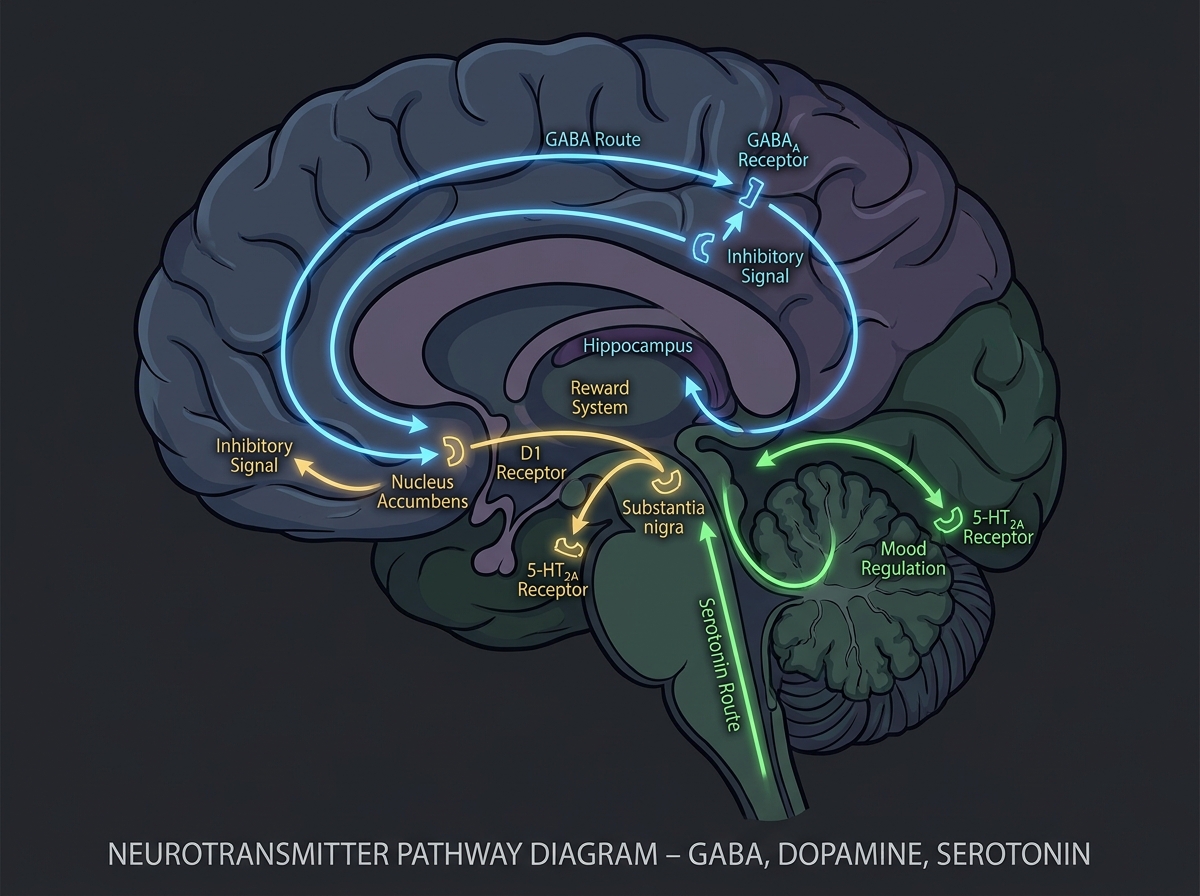
For men already tracking hormones or metabolic health through a hormone optimization program, it's worth noting that heavy drinking actively undermines the testosterone and cortisol balance you're paying to optimize.
The Tiered Replacement Stack
Structural fix first: CBT for social anxiety disorder. This is the highest-leverage intervention. Cognitive-behavioral therapy produces durable reductions in social fear — a long-term follow-up of group CBT showed patients remained significantly more improved than controls 4.5 to 6.25 years post-treatment [5]. It doesn't produce acute disinhibition, but it removes the reason you needed it. Twelve to 20 weekly sessions, roughly $150–$400 each before insurance.
First-line pharmacology: SSRIs and SNRIs. Paroxetine and sertraline are FDA-approved for social anxiety disorder. In controlled trials, sertraline produced a 53% response rate versus 29% for placebo at 20 weeks [8]; venlafaxine ER hit 69% response by week 12 [8]. These medications raise tonic serotonin — not in alcohol's acute spike pattern, but steadily, reducing the baseline anxiety that drives social drinking. Generic sertraline runs $4–$30/month. Side effects (sexual dysfunction, GI upset) are real and worth discussing with a prescriber. If you want a structured evaluation, DudeMeds connects you with prescribers who handle exactly this overlap of men's mental health and performance.
Acute situational options: Beta-blockers (propranolol 10–40 mg taken 30–60 minutes pre-event) blunt the physical symptoms of anxiety — racing heart, tremor, visible flushing — without sedation or cognitive impairment. They don't address emotional fear of judgment, which is why they work best for performance-specific contexts (presentations, first dates) rather than generalized social anxiety. Kava is the most credible plant-based option: a randomized placebo-controlled trial found aqueous kava extract produced a pooled effect size of d = 2.24 on anxiety scales with no clinical hepatotoxicity at study doses [3]. L-theanine (100–200 mg) promotes calm alertness via alpha-wave induction without sedation — a reasonable low-risk addition to coffee before social events [4].
What to avoid using as a replacement: Benzodiazepines share alcohol's GABAergic mechanism and carry documented median dependence onset of just 14 days, with withdrawal potentially lasting months [5]. Trading alcohol dependence for benzo dependence is not a harm-reduction win. For more on how CNS stimulant and depressant dynamics interact with focus and mood, the breakdown in why ADHD stimulants cause overactivation at higher doses covers overlapping receptor logic.
For a broader look at interventions that actually move the needle on men's health metrics, the highest-return biohacks for men in 2026 provides useful context on stacking these approaches. If you want a clinician to evaluate whether SSRIs, propranolol, or a full anxiety workup makes sense for your situation, Peter MD offers online consultations with practitioners experienced in men's mental and hormonal health.
Frequently asked questions
What is the closest non-alcoholic substitute for alcohol's social lubricant effect?
No single substitute replicates alcohol's full neurobiological profile, but a combination of low-dose propranolol for physical anxiety symptoms and kava for GABAergic anxiolysis comes closest acutely [3][5]. For sustained improvement, SSRIs or CBT address the underlying social anxiety disorder that makes alcohol feel necessary in the first place — producing equal or greater long-term social functioning without the toxic load [8].
Does kava actually work as an anxiety reducer, or is it just hype?
Kava has genuine clinical evidence behind it. A double-blind, placebo-controlled trial of aqueous kava extract showed a pooled effect size of d = 2.24 on the Hamilton Anxiety Scale with no serious adverse events or hepatotoxicity at the doses studied [3]. The hepatotoxicity concerns in older literature were largely tied to non-aqueous (acetonic or ethanolic) extracts and adulterated products — not the water-soluble preparations used in modern trials. Quality and preparation method matter significantly when sourcing it.
Can treating social anxiety with medication reduce alcohol dependence?
Yes, and this is one of the more underutilized applications of SSRI therapy. By reducing the baseline social anxiety that drives reliance on alcohol, SSRIs like sertraline lower the perceived need to drink before
Nutrition & Metabolic Health Specialist · 8+ years specializing in men's nutrition, Extensive training in clinical nutrition and metabolism
Taylor is a nutrition specialist focusing on men's metabolic health and weight management. With deep expertise in therapeutic nutrition for hormone disorders, Taylor researches and explains how nutrition impacts testosterone, metabolism, and overall male wellness.
Tools and references for this topic
Free calculators and reference charts built from the same sources as this article.
- CalculatorTestosterone Dose Calculator — Weekly mg to mL and Syringe Units
- CalculatorTestosterone Levels by Age — Reference Range Chart (Travison 2017)
- CalculatorVial Duration Calculator: How Long a Vial or Pen Lasts
- CalculatorTRT Cost Calculator — Cost Per Month, With and Without Insurance
- ComparisonTRT vs hCG — Two Approved Drugs, One Shared Indication